







New Report on Problematic Arbitration Clauses in Trade Agreements – Luxembourg Consistently in the Top Ten
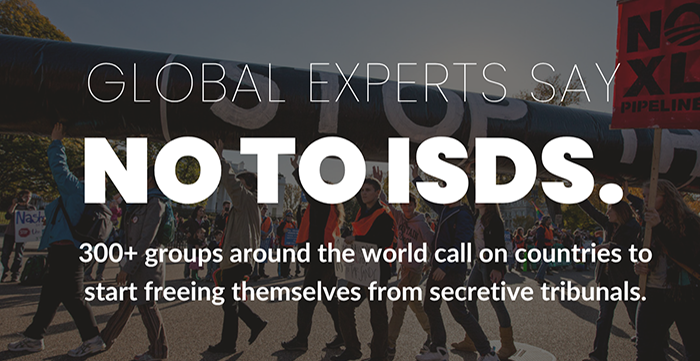
CAN Europe (Climate Action Network), a Europe-wide coalition of which Mouvement Ecologique is a member, has published a new report together with partners on ISDS provisions in trade agreements, highlighting how extensively these investor protection clauses are used within the EU. Mouvement Ecologique joins the call of more than 340 organisations to put a stop to these mechanisms.
Mouvement Ecologique has repeatedly drawn attention to the problematic nature of investment protection agreements, known by the acronym ISDS (Investor-State Dispute Settlement). These allow companies, under the terms of trade agreements, to sue states before private arbitration tribunals – often with billion-euro claims.
Following a 2025 analysis by European organisations presenting 10 such cases as illustrative examples, a new recent analysis by CAN Europe once again demonstrates how seriously these mechanisms threaten ambitious climate policy and global justice. Beyond their damaging consequences in the Global South, ISDS provisions are increasingly affecting governments here in Europe that seek to regulate or phase out fossil fuels. These governments risk costly lawsuits from investors who see their profits threatened – Luxembourg, for instance, is being sued by a Russian oligarch for €16 billion.
Luxembourg plays a particularly “notable” role in this context. As a major financial centre, the country has 60 active ISDS agreements, placing it seventh in Europe’s risk ranking. Investors based in Luxembourg have filed 48 known arbitration claims to date, with an average claim value of just under USD 849 million – one of the highest figures in Europe. Four of these cases directly concern claims in the fossil energy and resources sector.
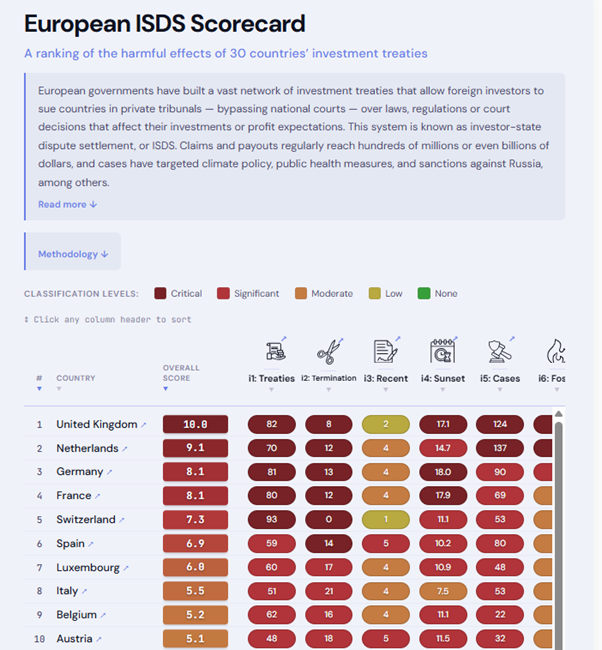
Zwar hat Luxemburg 17 % seiner Abkommen gekündigt, doch gleichzeitig unterstützt es weiterhin neue EU-Handelsabkommen, die ISDS-Klauseln enthalten, und hat seit 2015 vier neue solcher Abkommen unterzeichnet. Diese Inkohärenz gefährdet die Klimapolitik und die Kredibilität der Luxemburger Regierungen.
Der Bericht von CAN Europe ist eindeutig in seinen Empfehlungen: Europäische Regierungen sollten keine neuen Abkommen mit ISDS-Klauseln mehr unterzeichnen und bestehende Verträge systematisch kündigen. Besondere Aufmerksamkeit verdienen dabei die sogenannten „Sunset Clauses” – Übergangsklauseln, die es ermöglichen, dass ein gekündigtes Abkommen noch 10 bis 20 Jahre lang wirksam bleibt. Um diese Schutzwirkung zu neutralisieren, braucht es aktive gegenseitige Vereinbarungen zwischen den betroffenen Staaten. Darüber hinaus ruft der Bericht zur internationalen Zusammenarbeit auf: Nur wenn Länder – auch außerhalb Europas – gemeinsam handeln, kann ein glaubwürdiger Ausstieg aus dem ISDS-System gelingen.
Für Luxemburg bedeutet dies konkret: Es reicht nicht, einzelne Abkommen zu kündigen, solange gleichzeitig neue unterzeichnet werden. Ein kohärenter Kurswechsel im Sinne der gerechten Klimapolitik ist absolut überfällig. Global sollen sich Regierungen zusammentun, um diese problematischen Schiedsgerichte abzuschaffen.
Hier erfahren Sie mehr:
- Ranking und Übersicht: https://caneurope.org/news/the-hidden-harm-of-isds/
- Seite für Luxemburg: https://isds-scorecard-2026.netlify.app/profile_luxembourg
- Aufruf zum Stopp der ISDS Schiedsgerichte : https://europeantradejustice.org/2026-isds-statement/
30.04.26