








Report: How does a district heating network work in practice? – A highly stimulating visit to the Südcal S.A. heating network in Esch
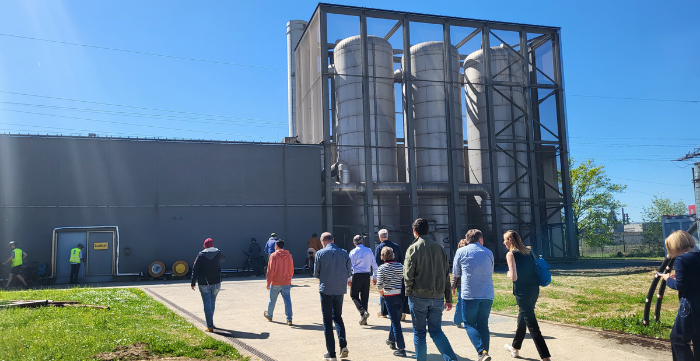
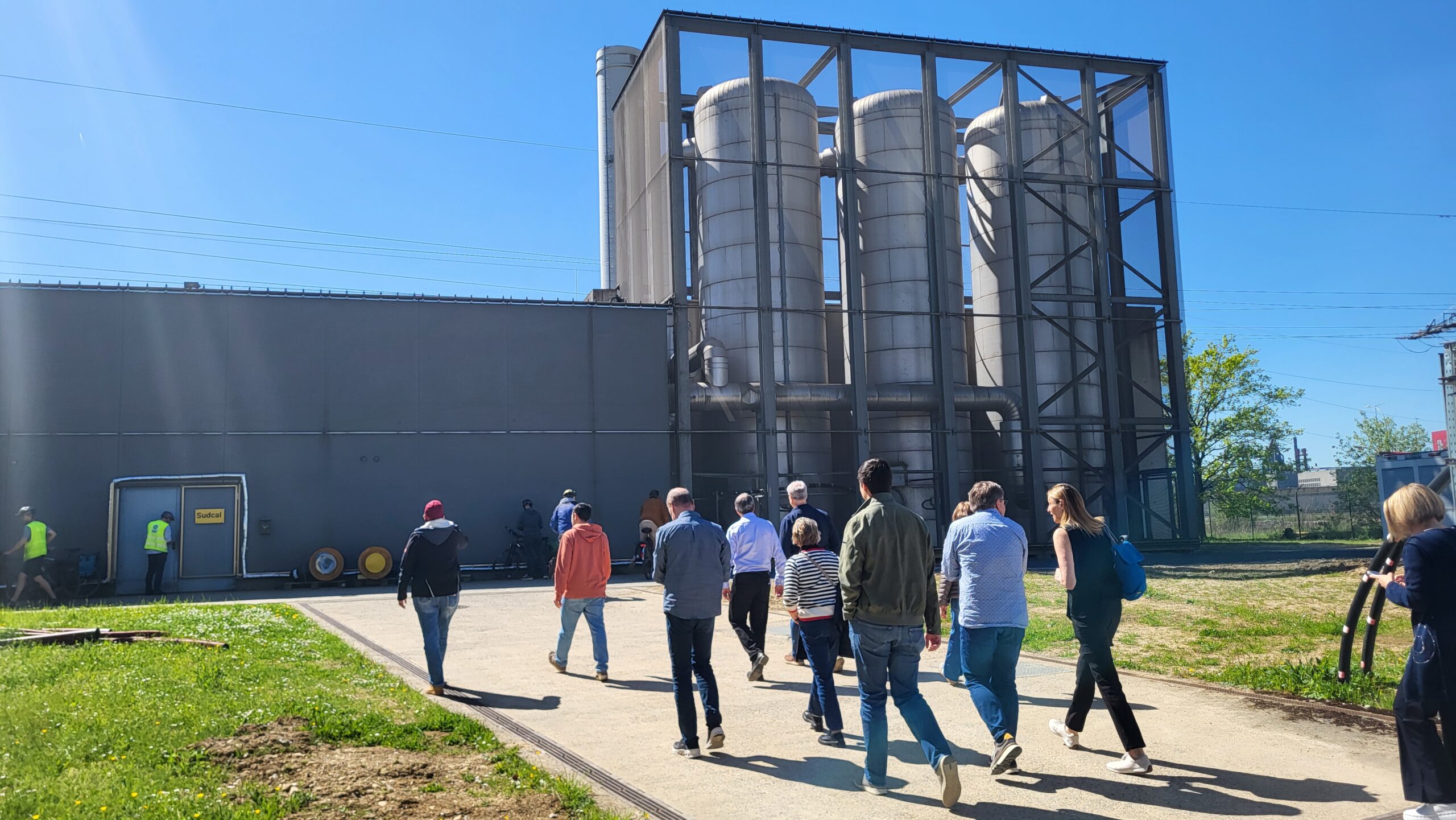
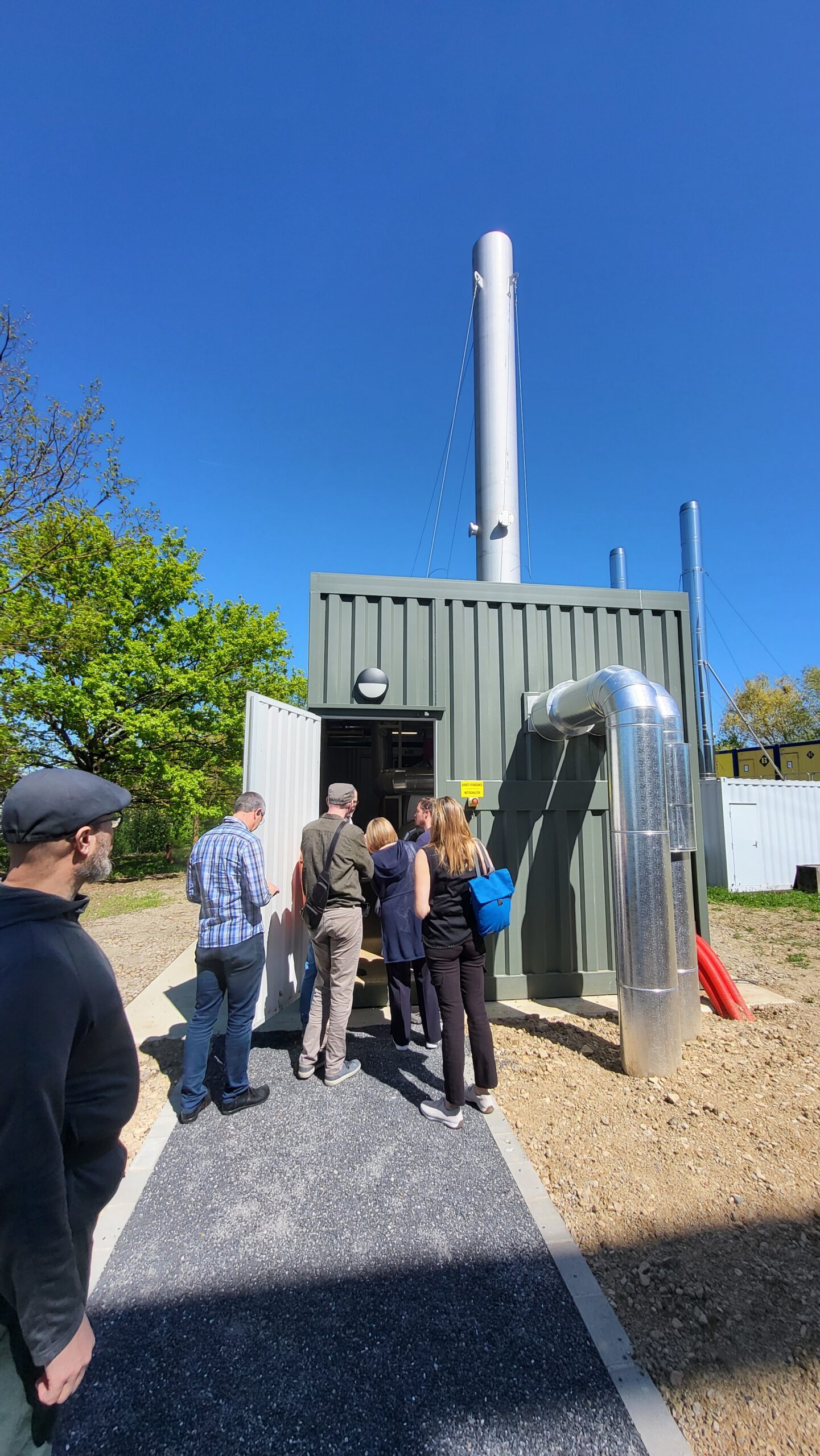
On a sunny Saturday morning on 25 April, 30 interested participants gathered in Esch-Alzette for a tour of the Südcal facilities organised by Mouvement Écologique.
The aim was to understand in detail how a district heating network functions — from heat generation and the use of so-called “waste heat” to network management and delivery to the end customer, in this case a public research building.
Under the engaged guidance of Mark Lauwers and Ruben Garmijn from Südcal S.A., the challenges of the heating transition and the need for careful planning of future heat supply were made particularly clear.
Centralised heat supply as a key building block for the heating transition
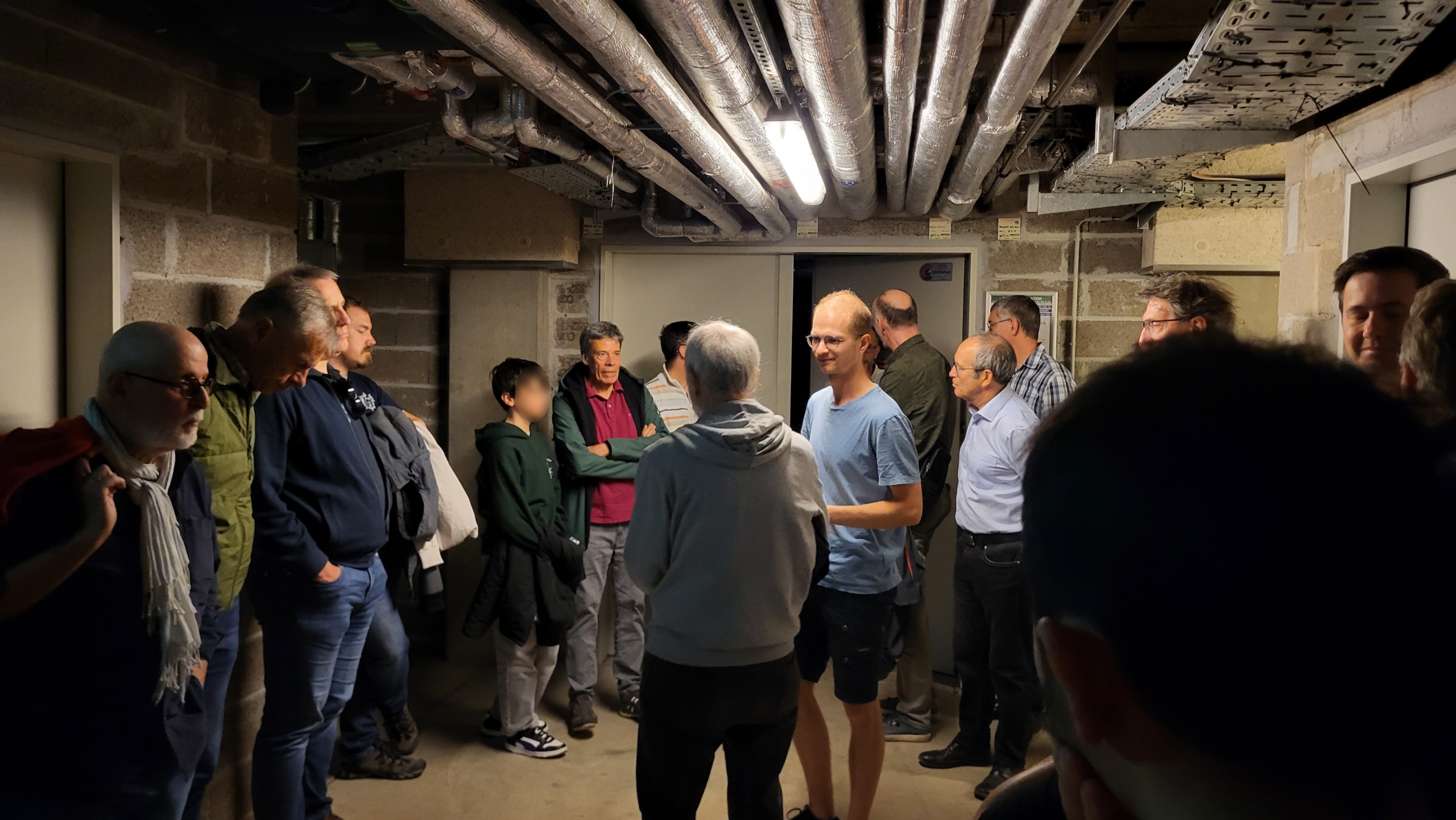
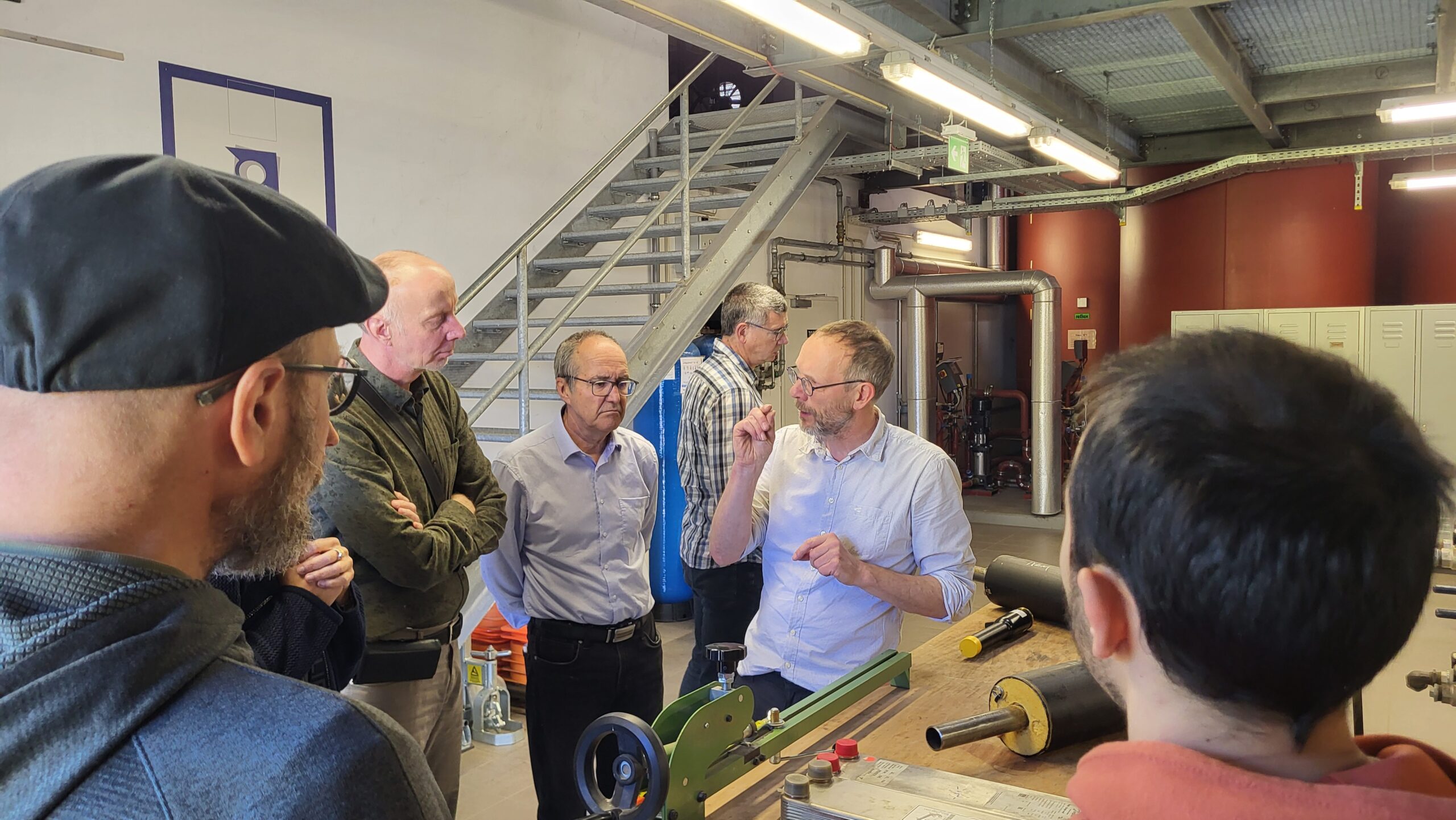
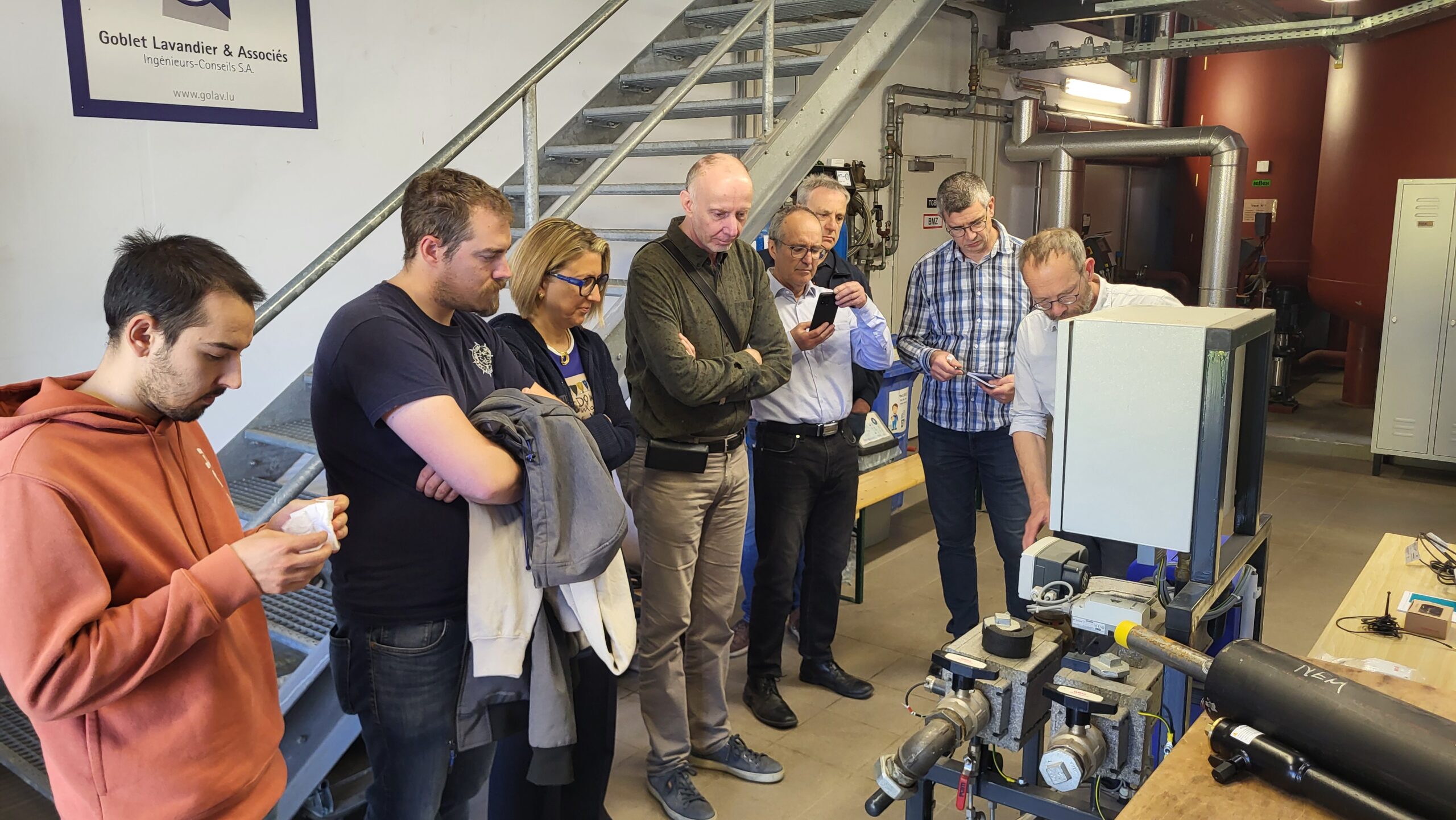
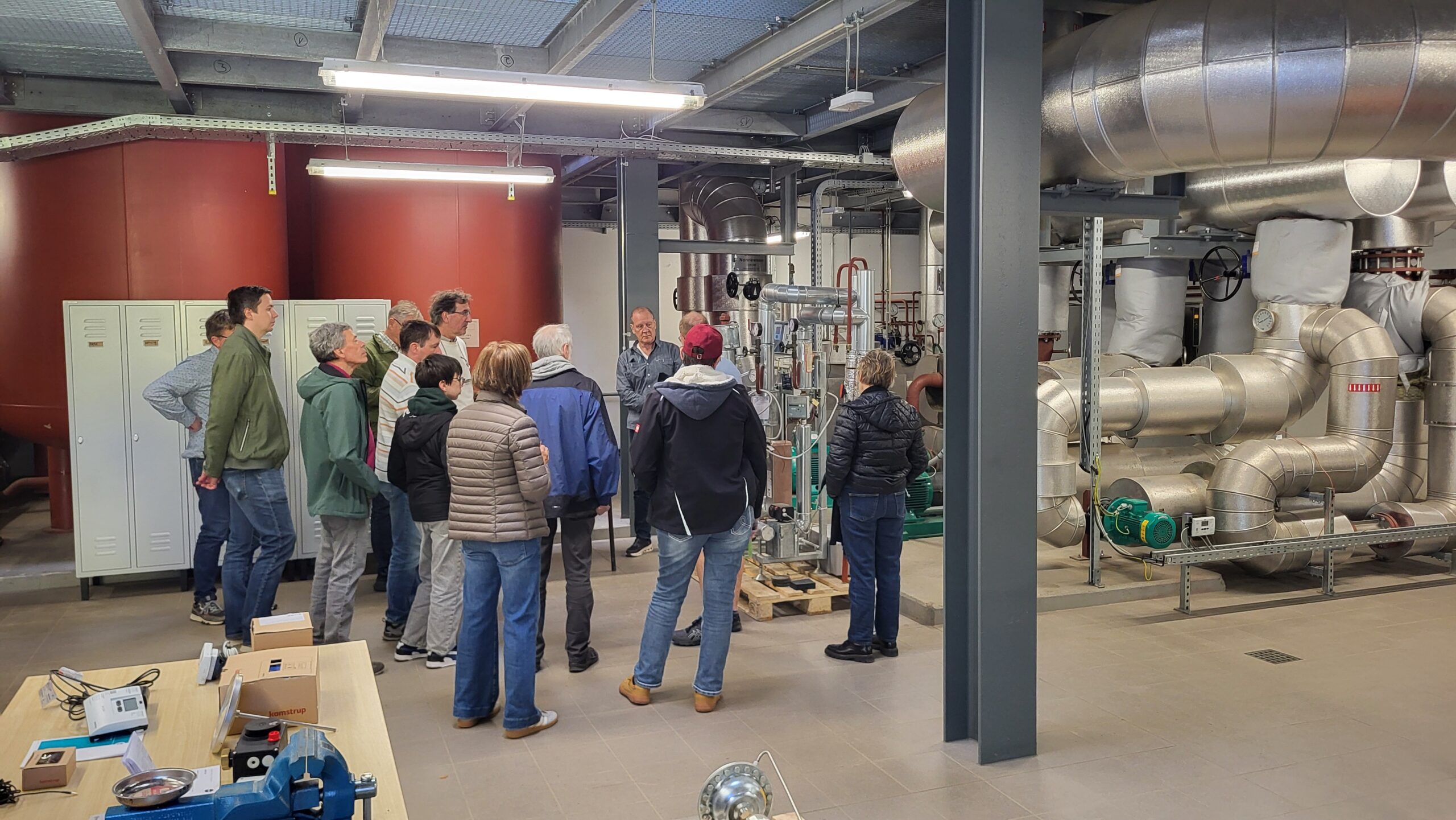
The first item on the programme was a brief introduction followed by a visit to the transfer station in the “House of Biohealth” — the point at which heat from the network enters the building. It became clear how a heating network can supply many public buildings and apartments from multiple heat sources. Distinct advantages were also evident: centralised supply increases efficiency, tapping into renewable heat sources can make a substantial contribution to the heating transition, and the building itself only requires a comparatively small installation to distribute the heat.
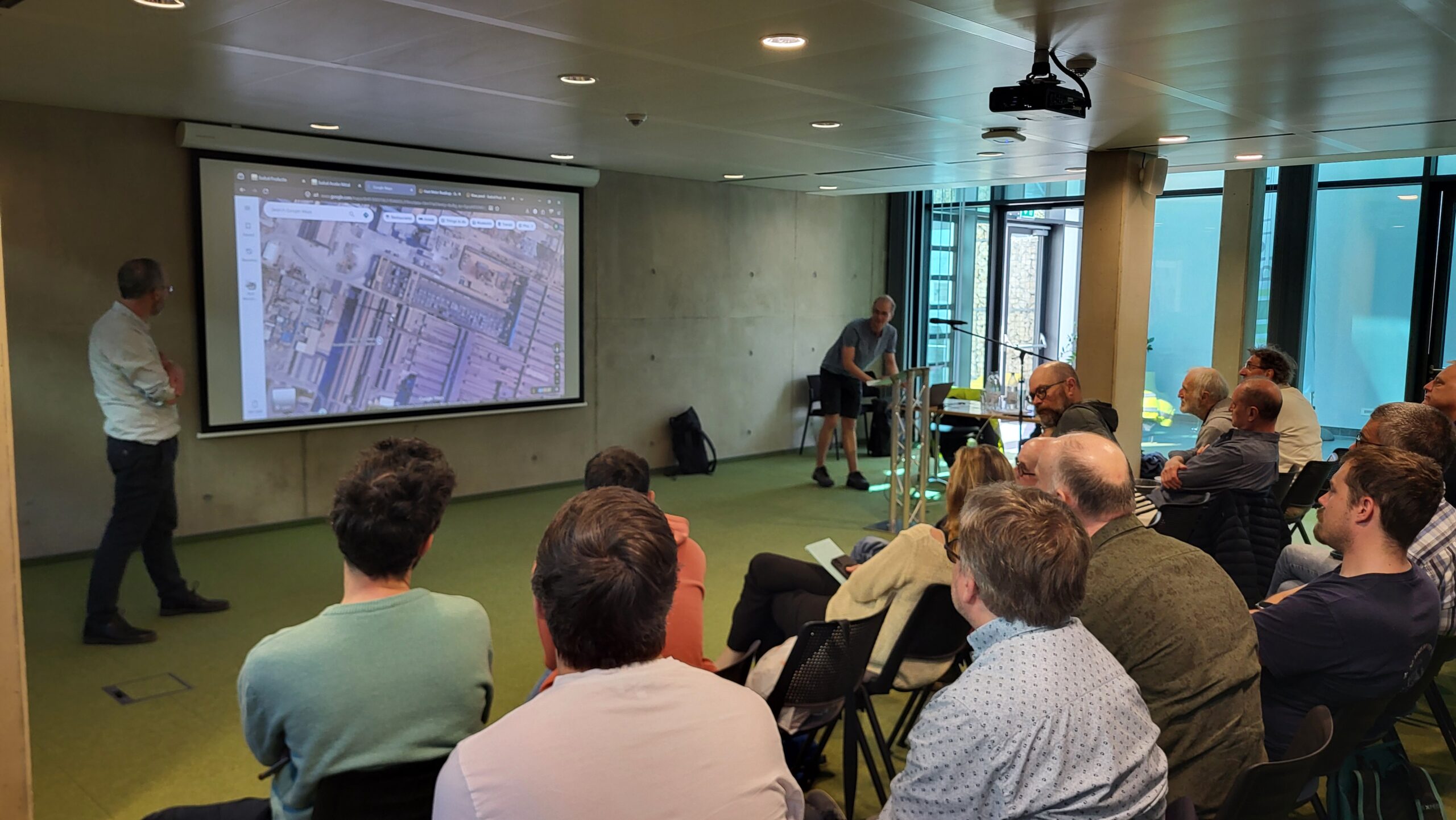
Mark Lauwers and Ruben Garmijn gave an impressive demonstration using their digital control system of how production and consumption are brought into balance. Disruptions in the network — such as excessive consumption by a building due to a poorly calibrated transfer station — can also be identified and resolved to ensure the most efficient operation possible.
The need for appropriate framework conditions for the successful operation of heating networks
Throughout the visit, explanations and discussions made it clear how significantly the operation of a heating network differs from other infrastructures such as gas or electricity grids. Unfortunately, there is currently a nationwide lack of clear framework conditions — covering aspects such as management, financing, and so on — which means these networks are far from being expanded to the necessary extent. At present, both nationally and specifically for Südcal, there is strong potential to connect additional districts and buildings, given the large volumes of available waste heat. However, this is stalling because there is no clear direction for the future expansion of the network. There is, for example, a request to connect a new tennis hall to the network — a highly sensible measure, but one that requires certain prior decisions to be made.
Long-term heat planning plays a central role here, providing a clear vision for 15 to 20 years ahead; it is indispensable both for financing network expansion and for tapping into additional heat sources. At the political, legal, and economic level, numerous open questions remain — for instance regarding consumer protection and tariff design (since customers are effectively dependent on what is in practice a near-monopoly supplier), for both heat feed-in and end-customer supply. The discussion also highlighted that public buildings within the network’s catchment area — such as a new CGDIS fire station — are not currently required to connect, which undermines planning certainty. This is an area where progress is needed.
Simplifying the use of waste heat from industrial processes
The Südcal heating network draws on a particular heat source: up to 45% of its heat supply comes from the waste heat generated by ArcelorMittal’s steel production in Esch-Belval. This “waste” (chaleur fatale) has taken on an entirely new significance in the context of the energy crisis. Rather than escaping into the atmosphere, part of this heat is fed into the network.
The visit showed, however, that making use of this heat is not straightforward — though with sufficient expertise it is absolutely feasible. Fluctuations must be managed as effectively as possible to minimise the use of additional gas turbines, and there is always the industrial risk of potential relocation or production cuts. The possible integration of new waste heat sources from other nearby industrial operators (such as Kronospan) raises its own set of questions: How would prices between supplier and buyer be regulated? How can fundamentally different heat sources be optimally coordinated? Who builds the necessary infrastructure to feed heat from the industrial site into the network?
Conclusion: Heating networks can make an important contribution to decarbonising heat supply — but a supportive framework is still lacking
The visit to the Südcal facilities gave a very concrete illustration of the potential that heating networks hold for the energy transition, and of how complex the technical, economic, and regulatory prerequisites are that need to be established. Particularly in densely populated cities such as Esch-Alzette, or in new development areas with public facilities, such networks represent a promising option for the heat supply of the future.
Key figures
The Südcal network has a capacity of 45 MW, equivalent to 3 large offshore wind turbines.
The network has a total length of 30 km, extending from the “Waassertrap” in Belvaux to the new “Nonnewisen” district.
There are 230 connection points in the network, supplying both large public facilities and residential buildings.
The PowerPoint presentation can be downloaded as a PDF .
30.04.26