








Of Blackbirds and Tits: Birdsong Excursion on Limpertsberg
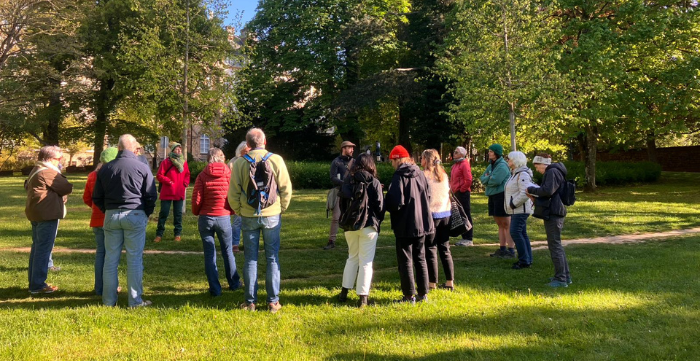
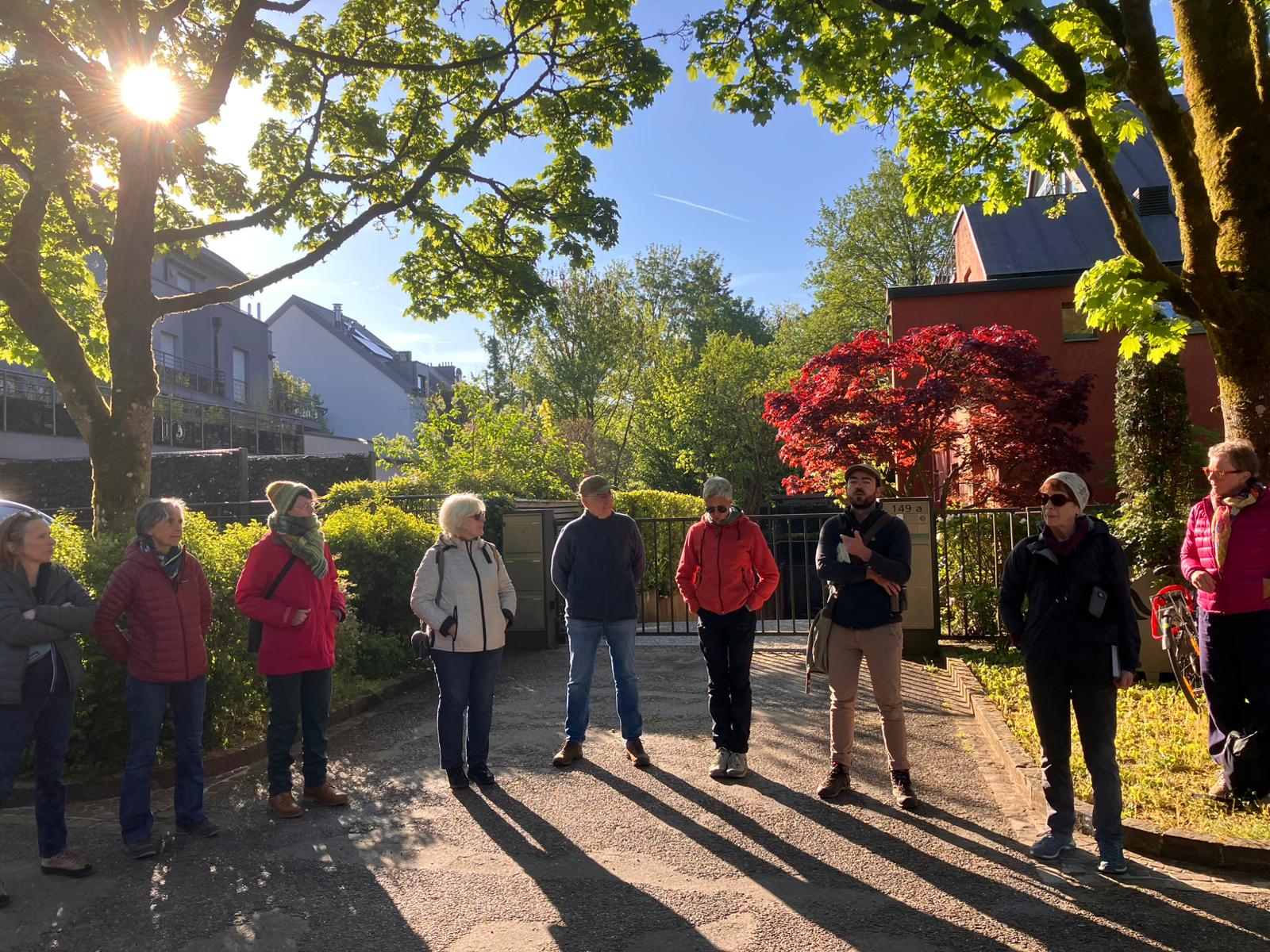
On Sunday, April 26, 2026, around 25 nature enthusiasts met at 8:30 a.m. in Tony Neumann Park on Limpertsberg in Luxembourg City. Despite the cool temperatures, but under bright sunshine, they set off into the morning for birdwatching. Under the guidance of ornithologist Max Steinmetz, participants were introduced to the world of bird songs—since most species can be identified by their calls.
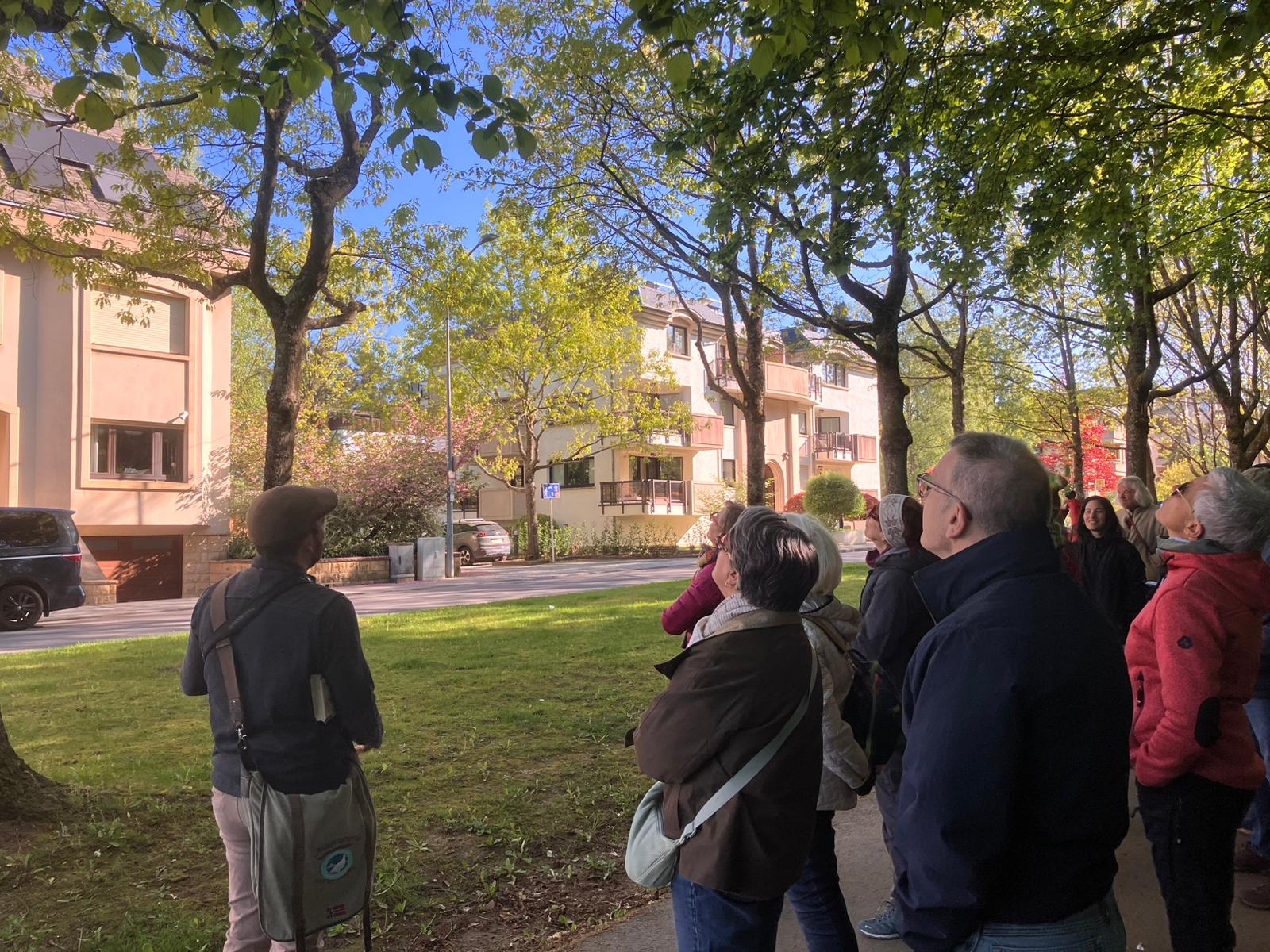
The fact that the excursion took place in an urban setting initially surprised some. Claire Wolff from Mouvement Ecologique explained the approach: cities, too, should provide habitats for animals. With sufficient green spaces—such as diverse parks and gardens, tree-lined avenues, or green façades—nature can also be experienced in urban areas. For beginners in particular, the lower diversity of species in residential areas is an advantage—around 15 different species could be heard, providing an ideal basis for learning to distinguish between different chirps and trills.
The group then continued slowly and attentively across Limpertsberg: in addition to pigeons, blackbirds, tits, and chaffinches in the park near Uni.lu, sparrows could be heard in the allotment gardens, and in the hedges, whitethroat, dunnock, robin, and wren. The first swifts returning from Africa were also circling in the sky, accompanied by the more distant song of a song thrush.
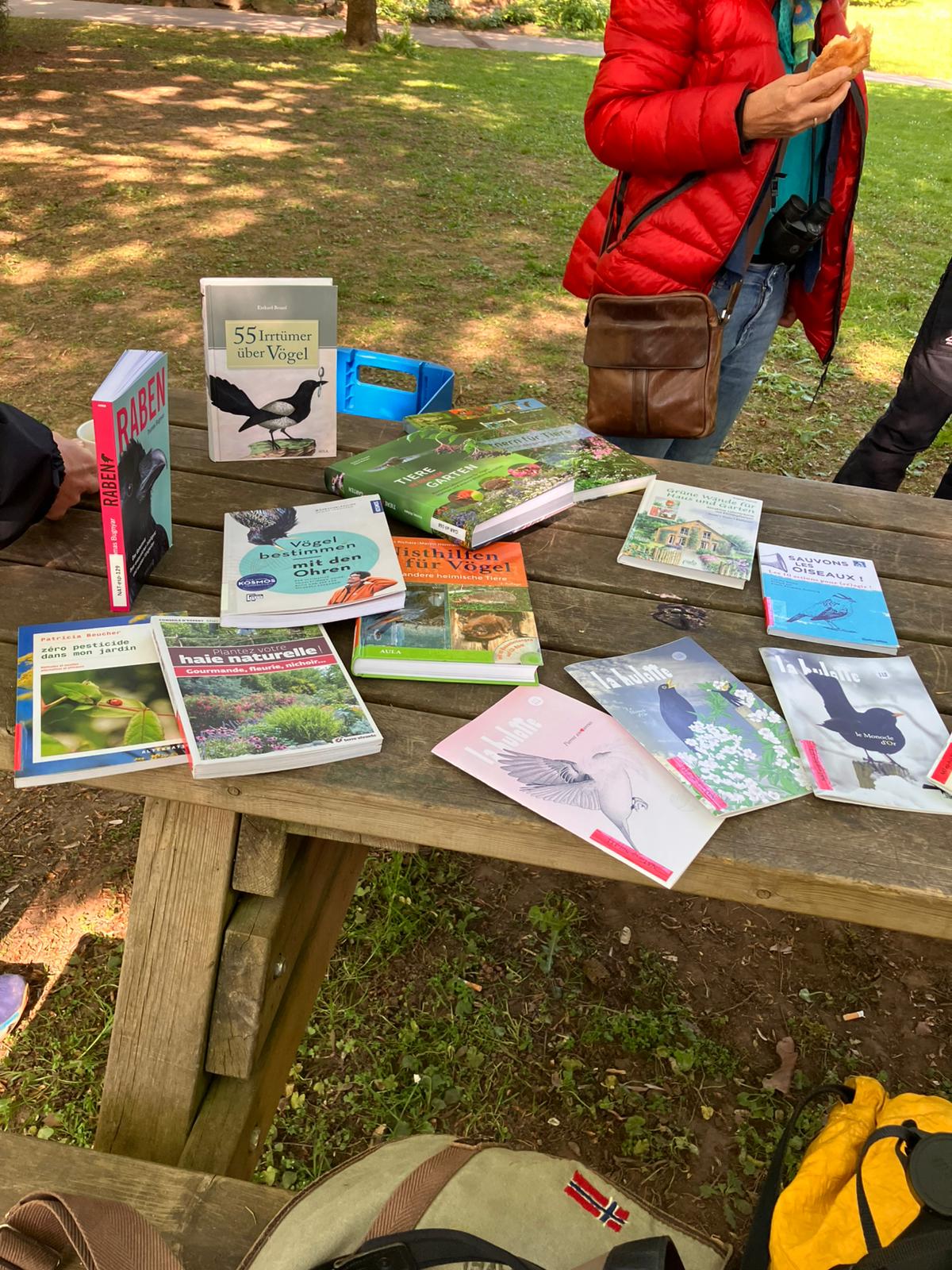
The morning concluded with a relaxed gathering featuring coffee and “Mëtsch,” along with a small selection of bird literature from the Oekobib (library of the Oekozenter) in the park. A lovely start to a Sunday morning!
Species list:
- Wood pigeon
- Eurasian collared dove
- House sparrow
- Chaffinch
- European robin
- Eurasian wren
- Common swift
- Carrion crow
- Eurasian magpie
- Dunnock
- Common whitethroat
- Common starling
- Great tit
- Blue tit
- Common blackbird
Free app for identification:
The Merlin Bird ID app can help you identify bird songs. Simply record the unknown sound, and the app will suggest which species it might be. It is based on a vast database with millions of observations and uses artificial intelligence for recognition.
29.04.26