








How can a modern energy concept supply an entire neighbourhood with renewable energy?
A highly stimulating visit that vividly illustrated a complete energy transition
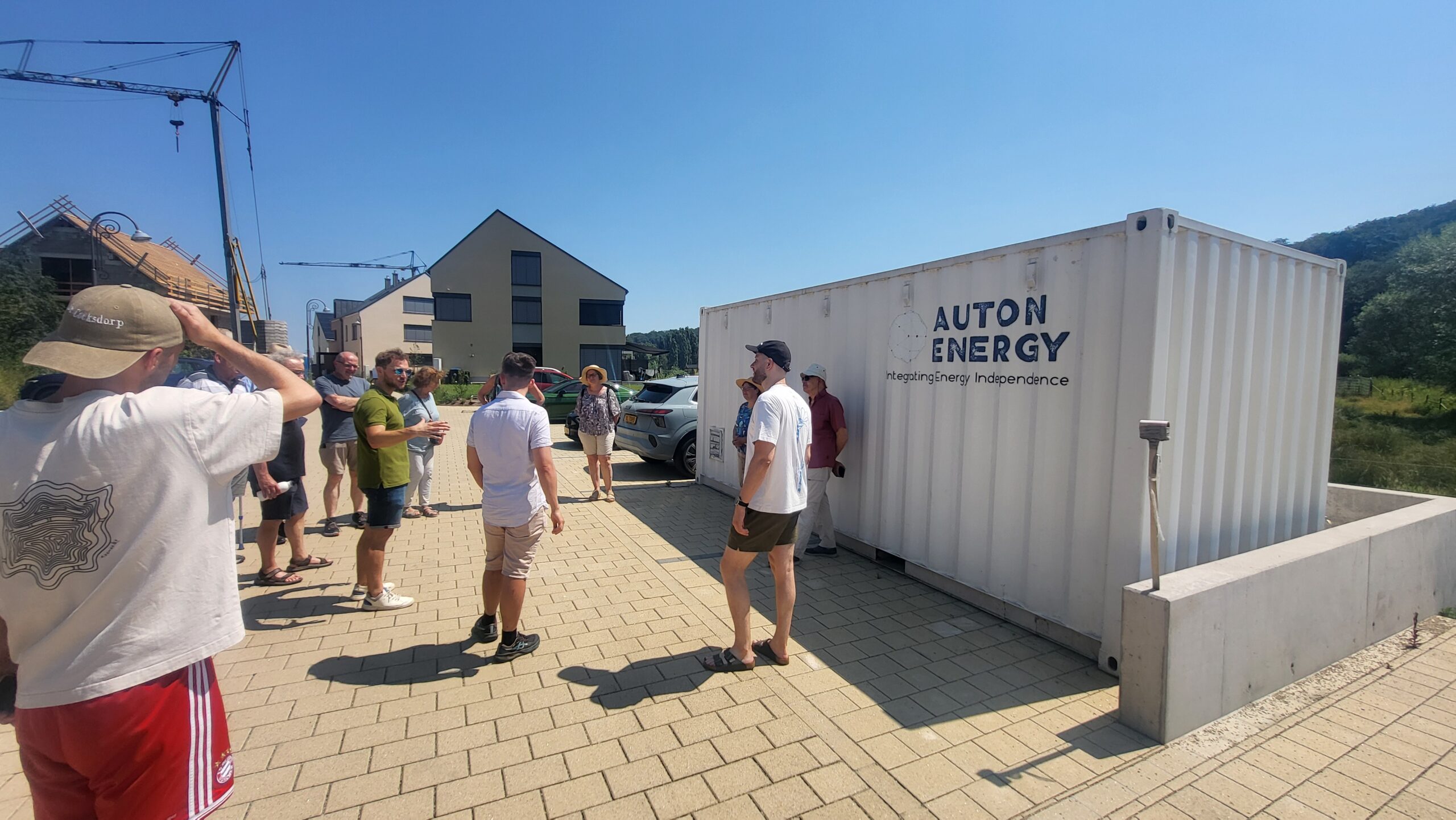
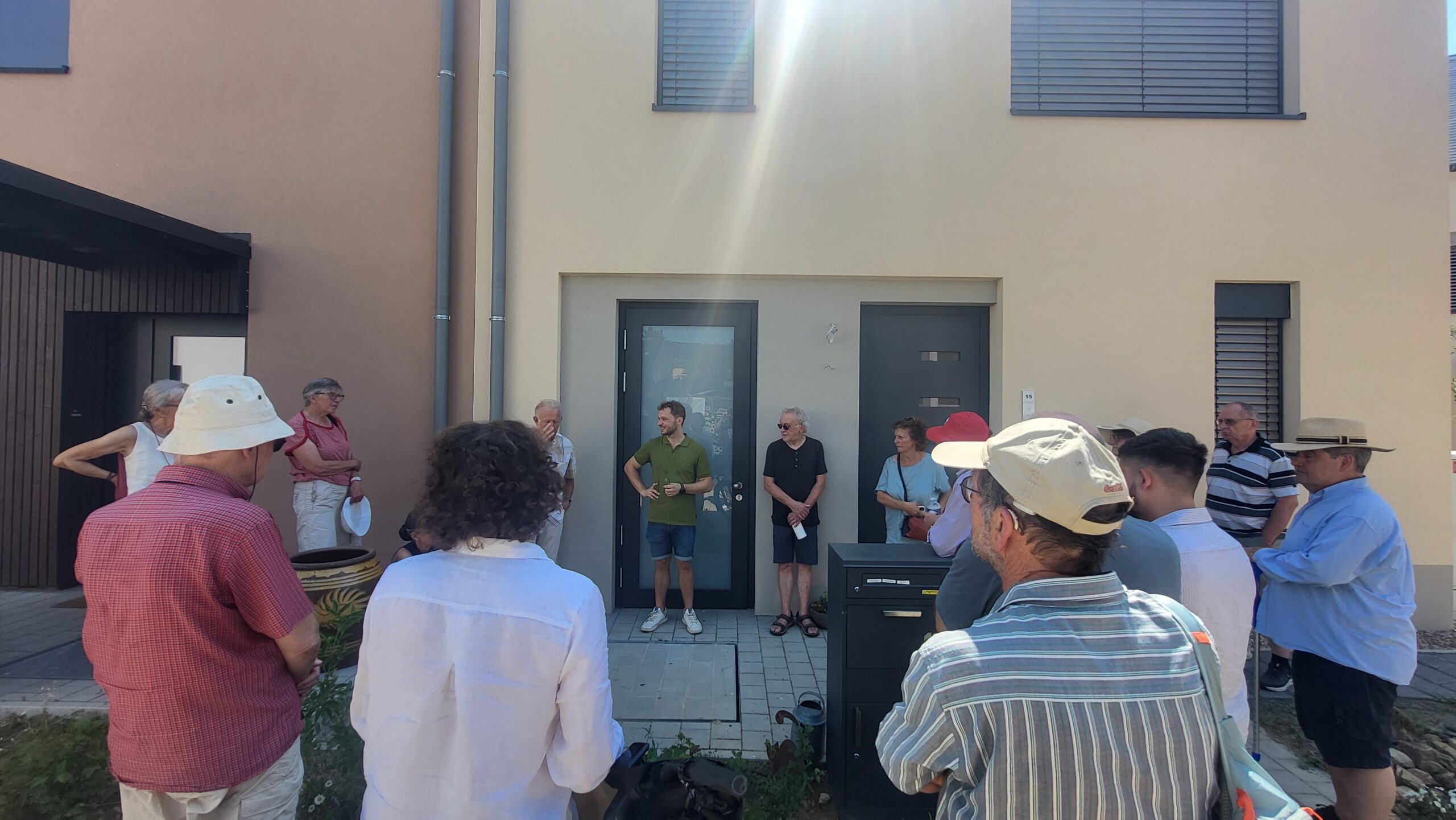
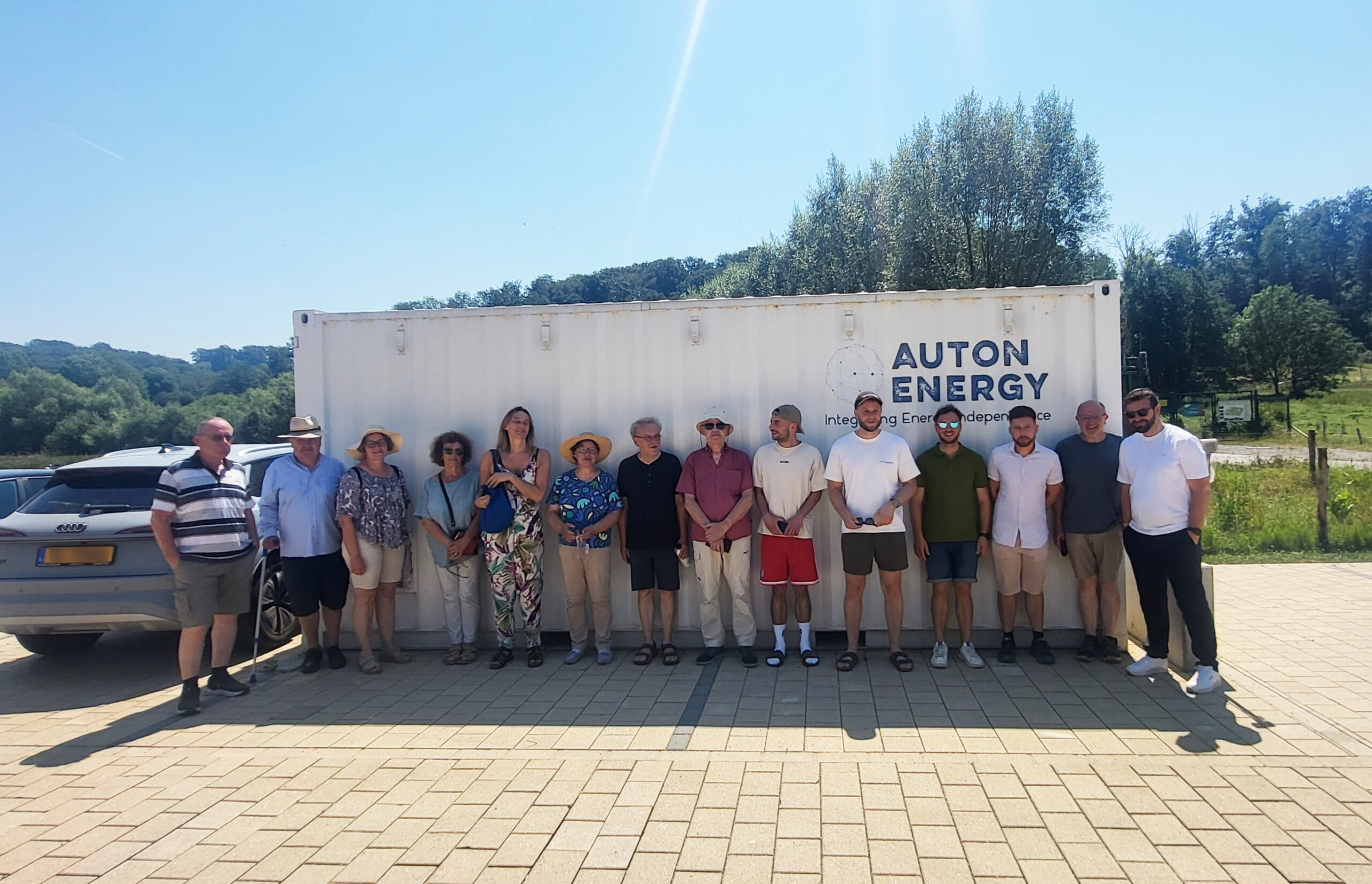
What might the energy supply of the future look like once it is no longer conceived at the level of individual buildings, but for an entire neighbourhood? This was precisely the question explored by a site visit organised by the Mouvement Écologique last Saturday, 27 June. Despite the intense heat, 25 interested participants gathered on site to gain a concrete impression of how an innovative neighbourhood energy project works in practice.
A project within a municipal and regional context
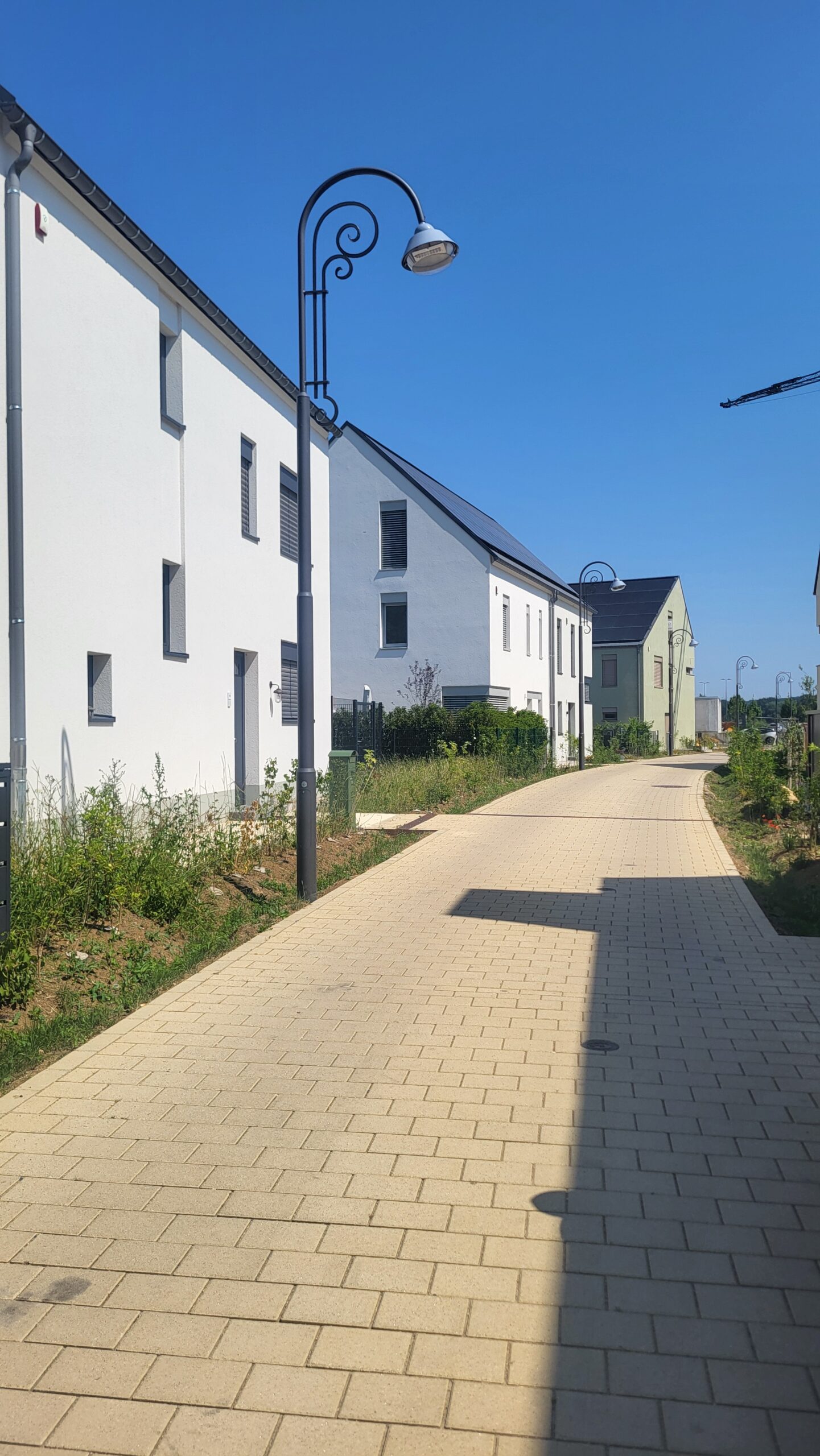
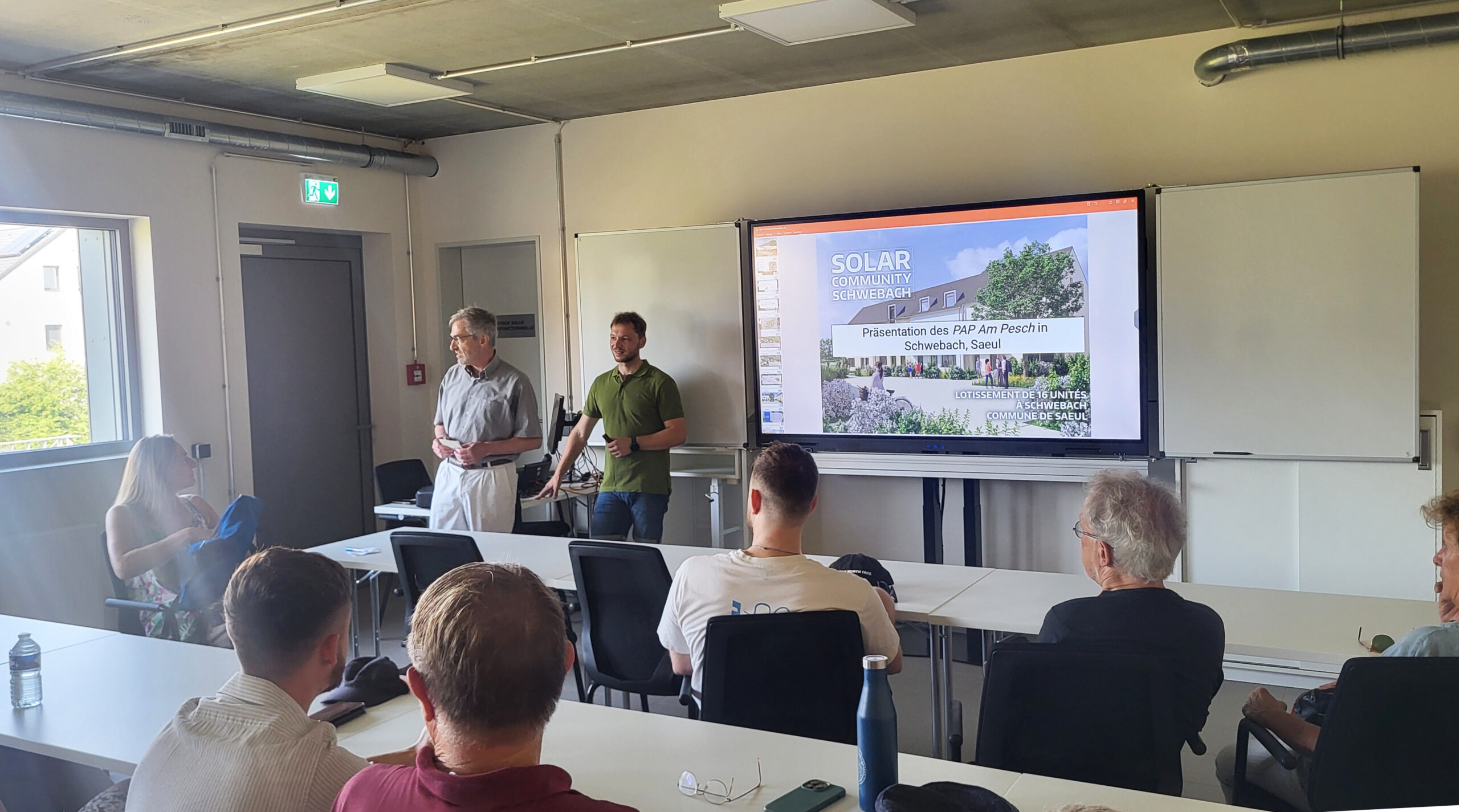
The mayor of the municipality of Saeul, Gérard Zoller, opened by setting the project within its broader municipal and regional context and presenting the political motivations behind it. It thus became clear from the outset that the “Am Pesch” neighbourhood in Schwebach is the expression of a deliberate municipal policy decision: to think about the creation of affordable housing, the development of livable residential areas, and the energy concept together.
An energy concept planned from the start
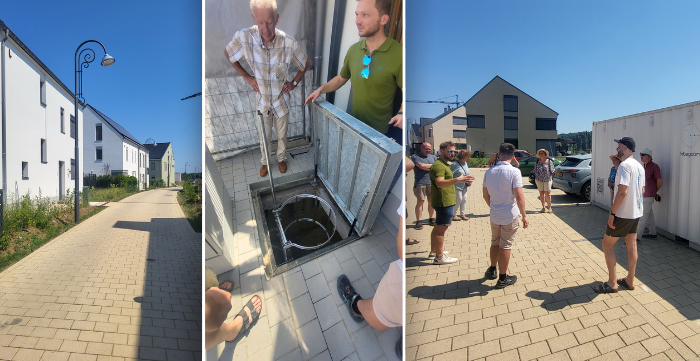
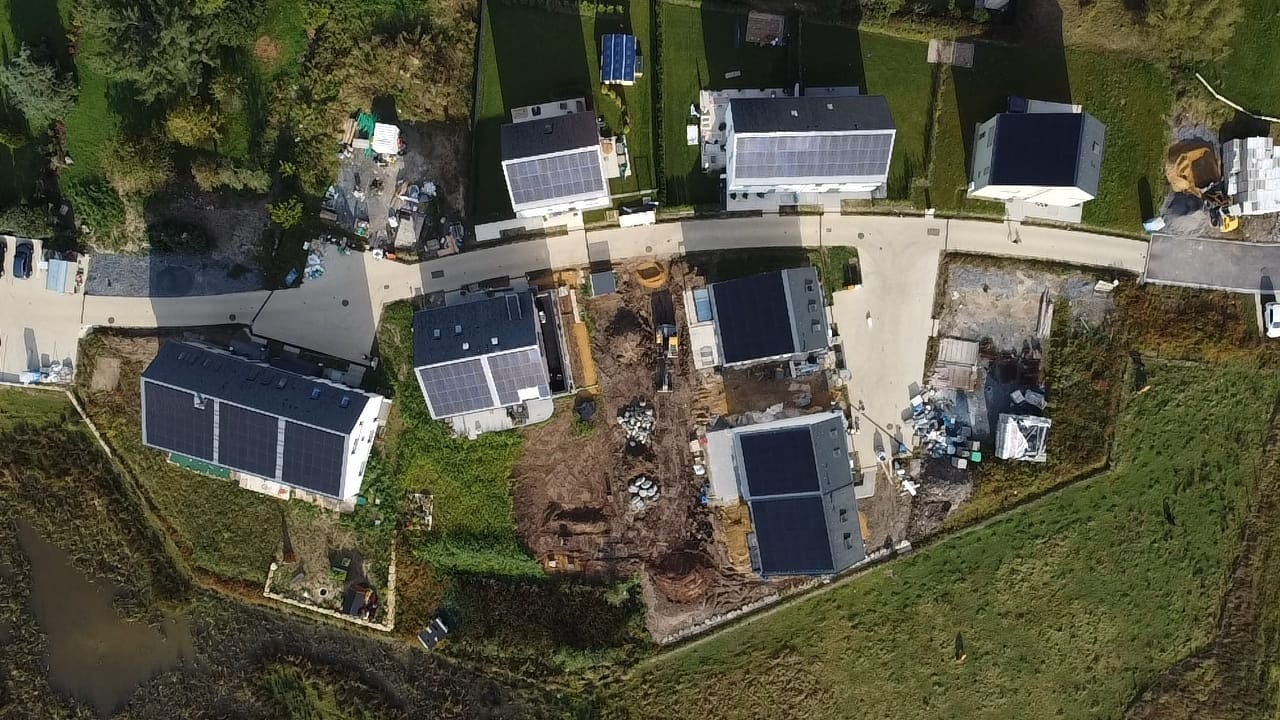
Under the expert guidance of Ben Scheitler, project manager at the Energiepark, the presentation and the on-site installations illustrated how the planning of the neighbourhood was steered by an energy concept based on the shared generation and use of energy. Geothermal energy, photovoltaics and other renewable energy sources are intelligently combined here. A shared neighbourhood battery makes it possible to temporarily store surplus energy and distribute it as needed, while so-called energy sharing allows households to exchange self-generated electricity among themselves.
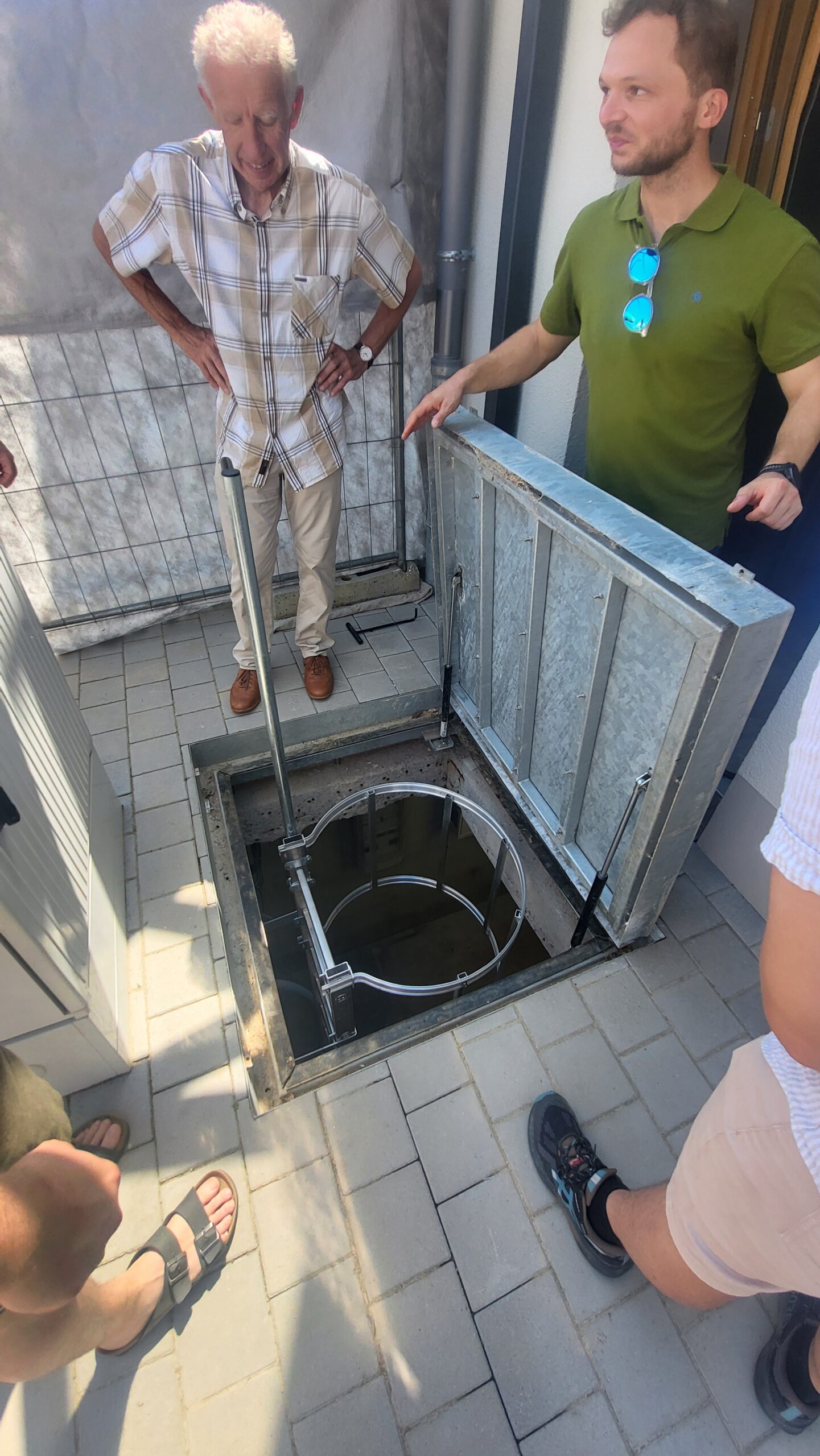
This is also reflected in the construction itself: the orientation of the buildings – and therefore of the roof surfaces – was chosen, for example, so that the various solar installations reach their optimal output at different times of day, ensuring that enough electricity is produced for the neighbourhood throughout the day, including at peak consumption times such as the late afternoon. As drilling was not possible, narrow vertical ground collectors were used. Compared with horizontal collectors, vertical collectors offer the advantage of leaving households the greatest possible freedom in designing their gardens.
Although this is a new development area that could be planned according to these principles from the ground up, many aspects can nevertheless be transferred to existing buildings – particularly with regard to the switch to heat pumps.
In total, up to 80% of the neighbourhood’s consumption can be covered by solar electricity. One hundred percent cannot be achieved, since there are always periods when the sun does not shine enough, for example in winter. The battery distributes production within a single day, but seasonal storage is therefore not possible. In addition, electricity is fed into the grid. The planning of a wind turbine in the vicinity, and the connection of the development to it, will make it possible to increase “self-sufficiency”.
Tangible comfort: 22 degrees in the middle of a heatwave
The visit to a residential house finally demonstrated in particularly striking fashion just how noticeable a well-thought-out energy and building concept is in everyday life. While the summer heat prevailed outside, the building materials, combined with passive cooling via a heat pump, kept the interior at a pleasant 22 degrees.
Only the greening of the residential area still holds potential for improvement – for instance, through covering the parking areas with green carports or through additional shade-giving trees in the public space.
Conclusion
The visit to Schwebach showed that a consistent and comprehensive energy transition offers numerous advantages: through cooperative operation, the costs of upkeep and maintenance are borne collectively, the energy costs for residents remain very favourable overall, and thanks to intelligent control systems the interplay of the many different technologies remains easy for the individual to manage.
30.06.2026