








A lantern parade on St John’s Day: announcements as part of the ‘Aktioun Gehaansfénkelchen’ – When the night sparkles…
As part of the ‘Aktioun Gehaansfénklelchen’ campaign, Mouvement Ecologique called on people not to miss the firefly light show around St John’s Day (24 June). Many of you heeded the call and shared your experiences with us.
We received many reports in person, and many had observed the fireflies in their own gardens, which is very encouraging! But quite a few people also went out in search of them ‘op der Gewan’ and in the woods and were successful. However, the numbers varied from place to place, which is probably down to the quality of the habitat. It is well known that, amongst other factors, the number of snails is a decisive factor, as firefly larvae feed on them. The implication for (natural) gardens is, of course, that you should avoid using snail poisons if you wish to support fireflies (and many other animals!).
It was also observed that, under the same weather conditions in the same location but on different evenings, the number of flying fireflies varied considerably. Could the prolonged heatwave have taken its toll on the ‘Gehaansfénkelcher’ as well…?
The night walk organised by Mouvement Ecologique on 20 June was also very inspiring – despite an approaching thunderstorm, numerous fireflies could still be seen on the Bridel (opposite the restaurant at Eecherfeld). The expert explanations provided by the ‘guides’ were also extremely fascinating: for example, that even small paths act as a barrier for females, as they cannot fly; that the adult insects die shortly after the impressive display, once reproduction has been ensured; that the larvae then spend 2–3 years in the ground; and much more besides.
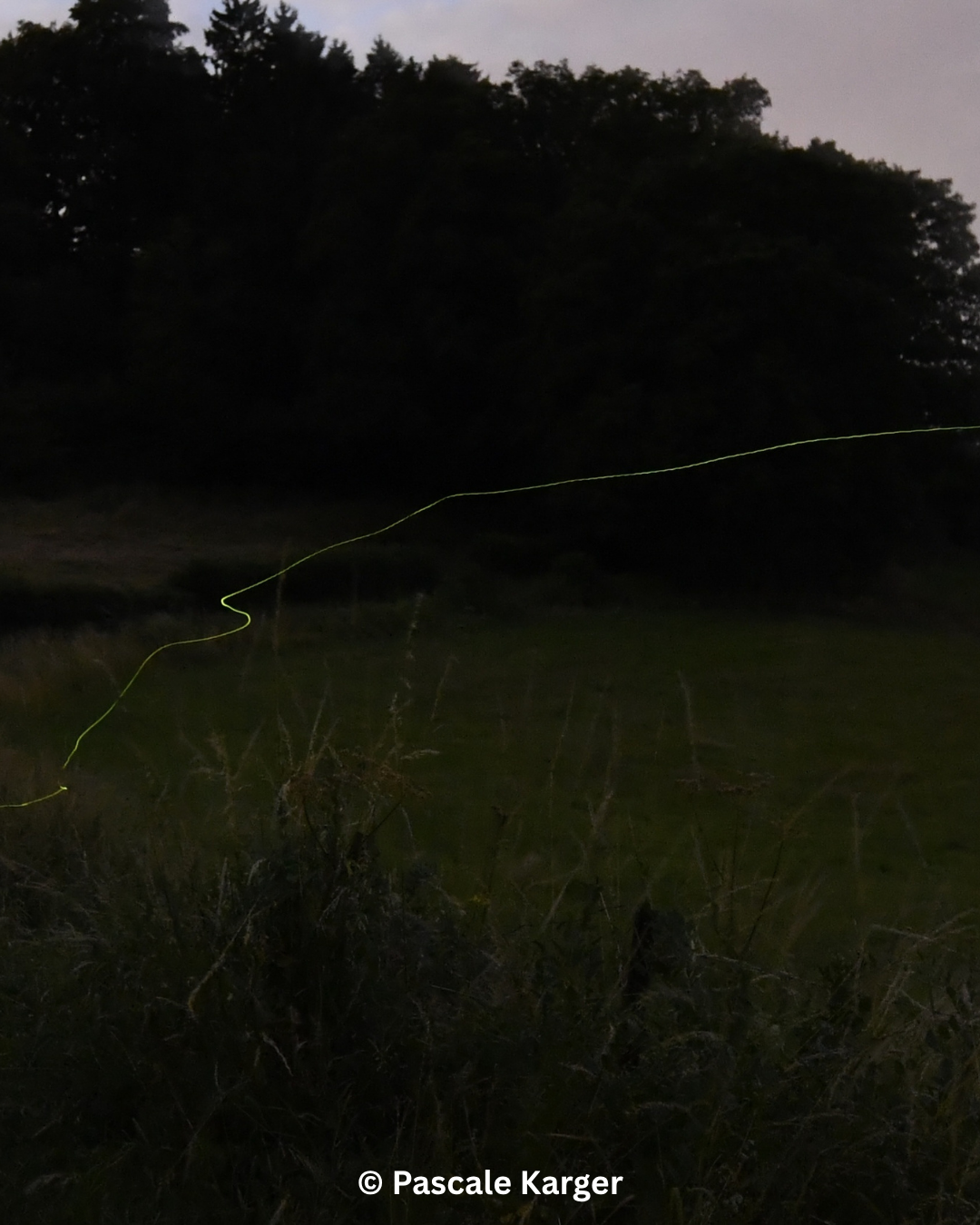
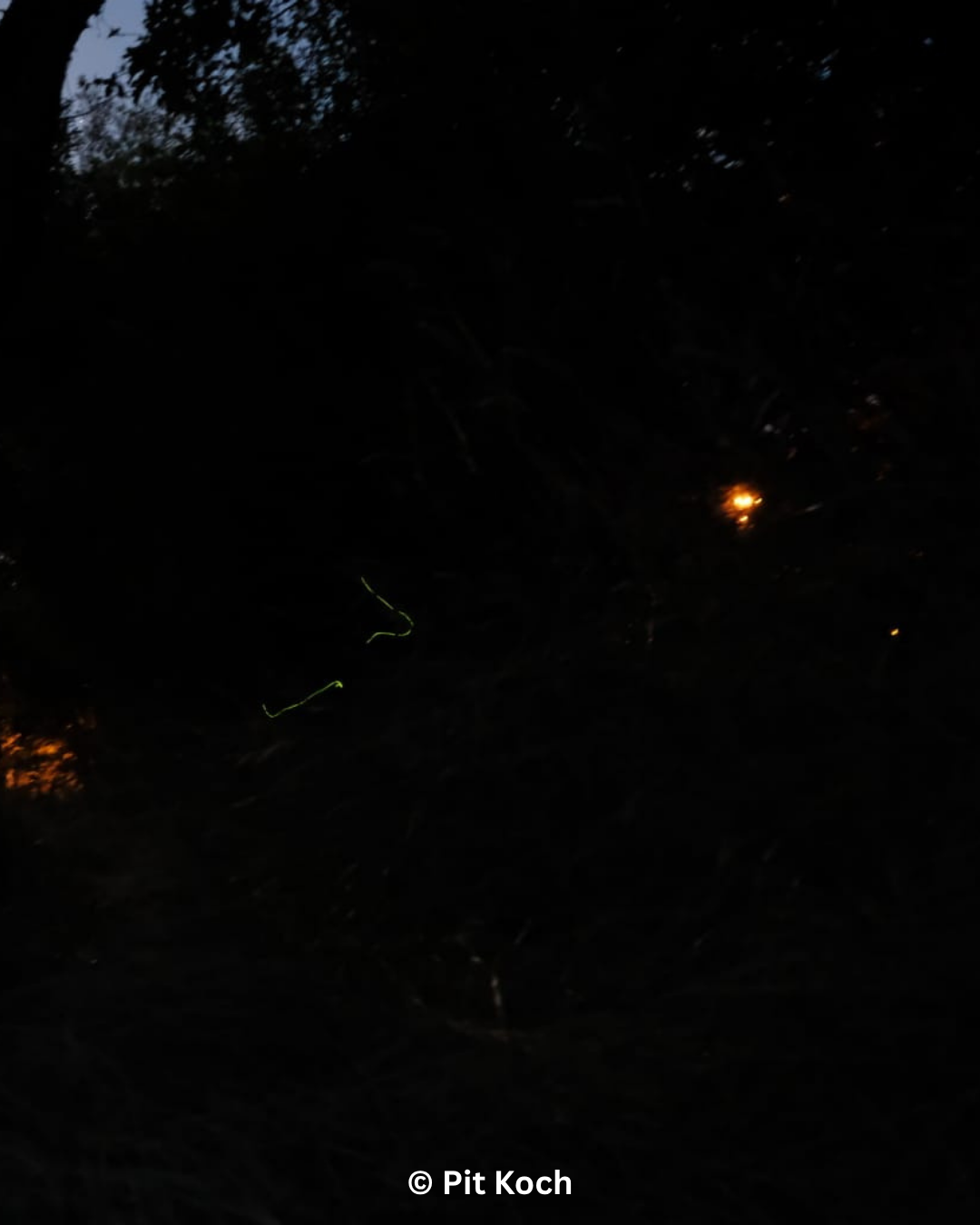
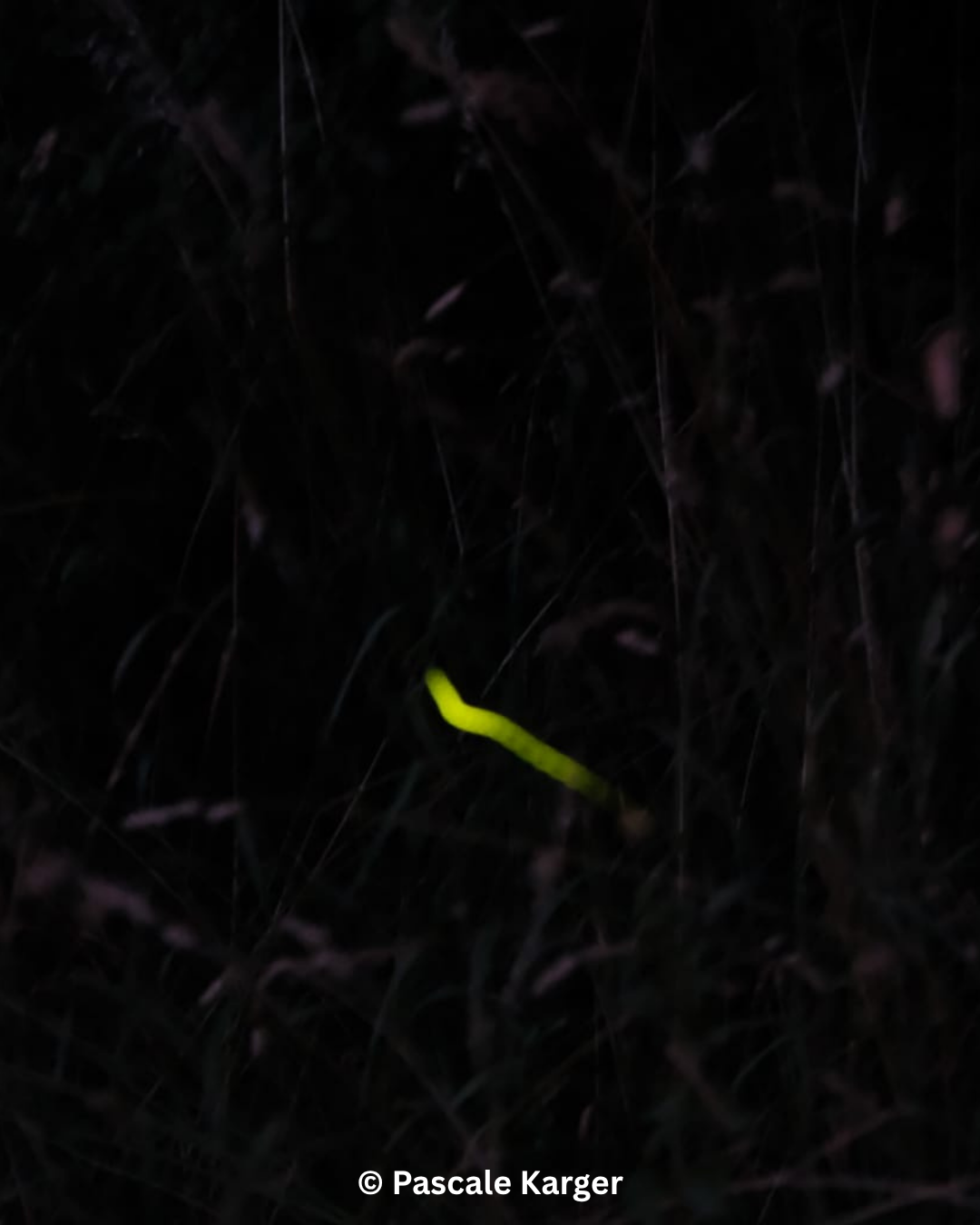
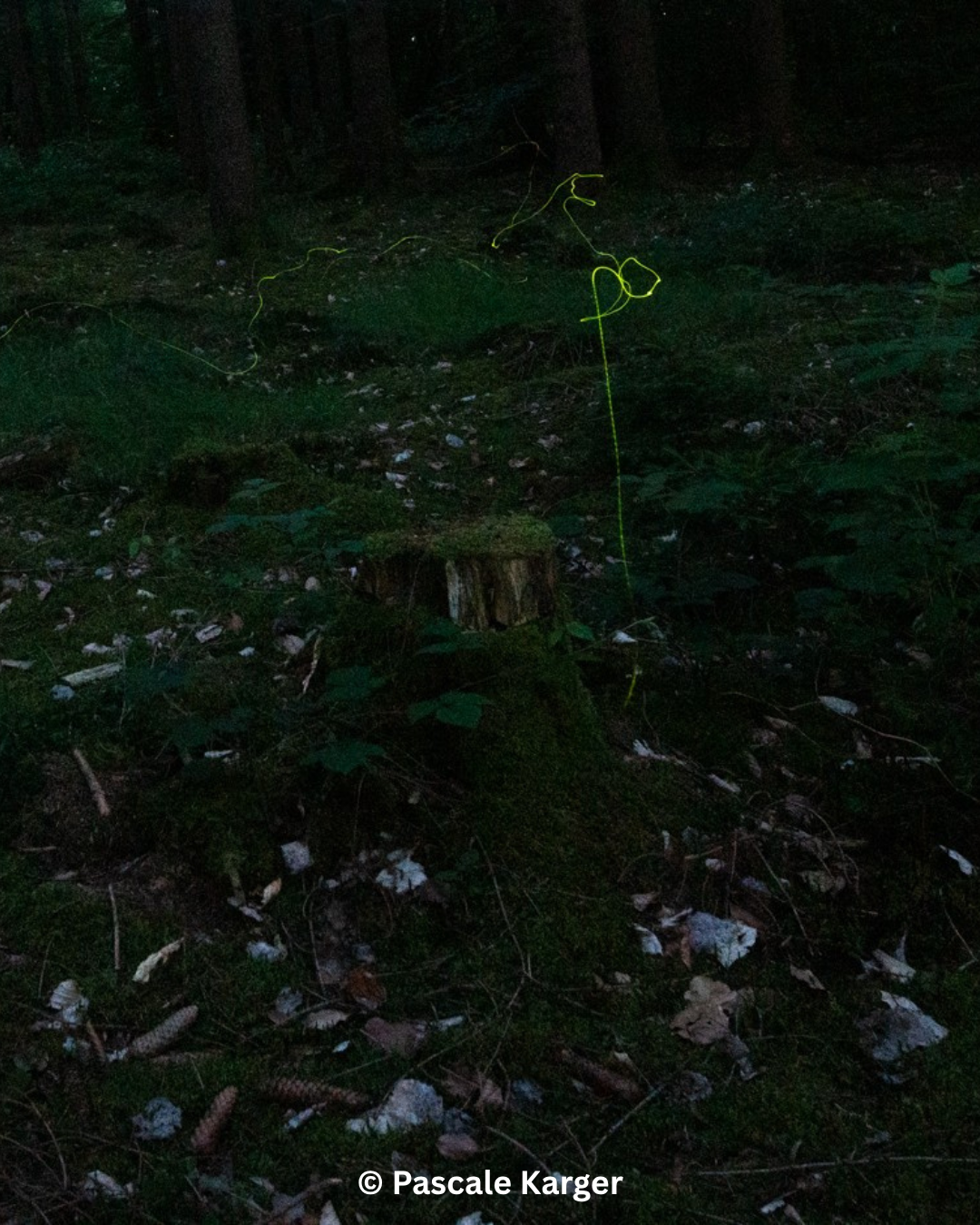
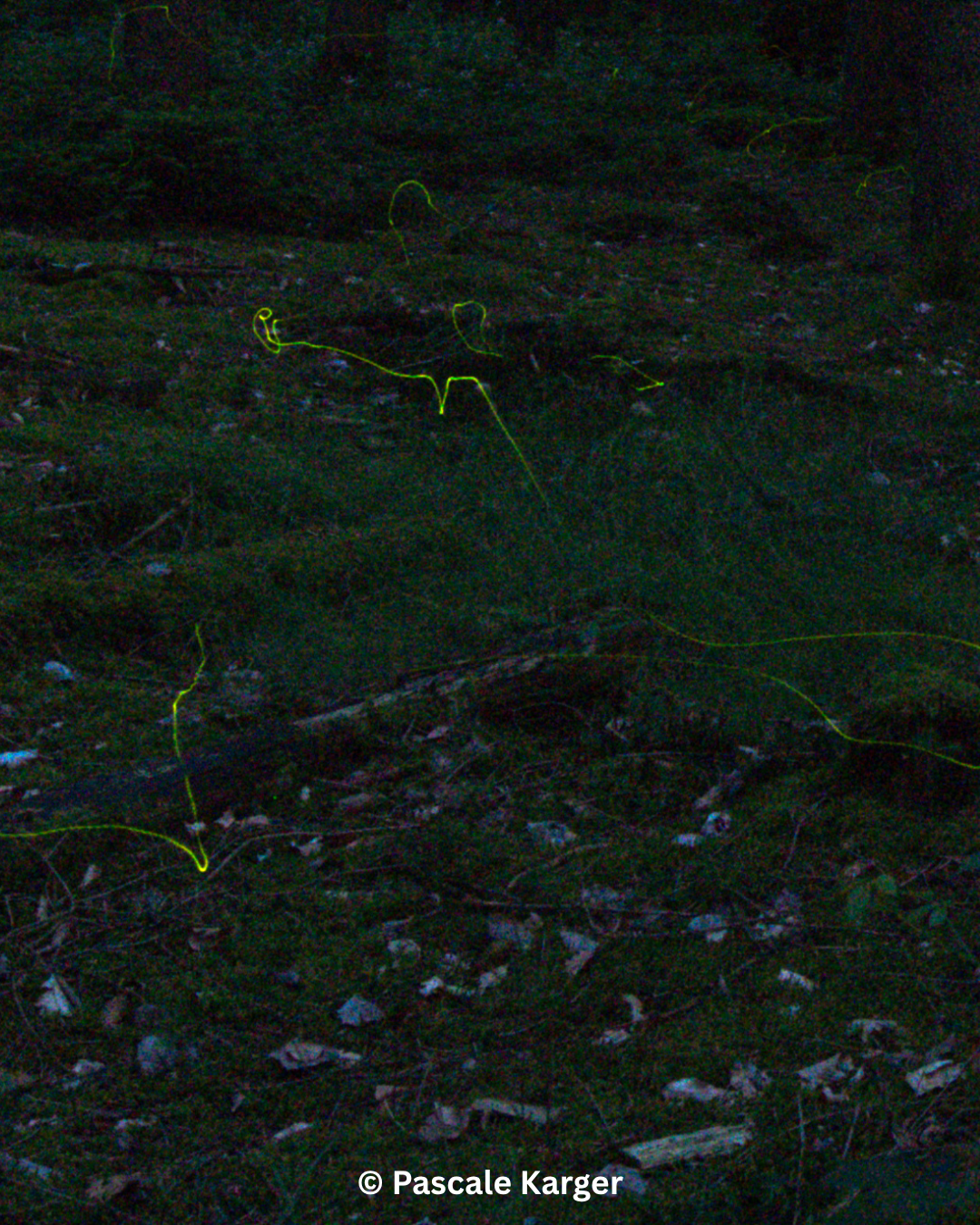
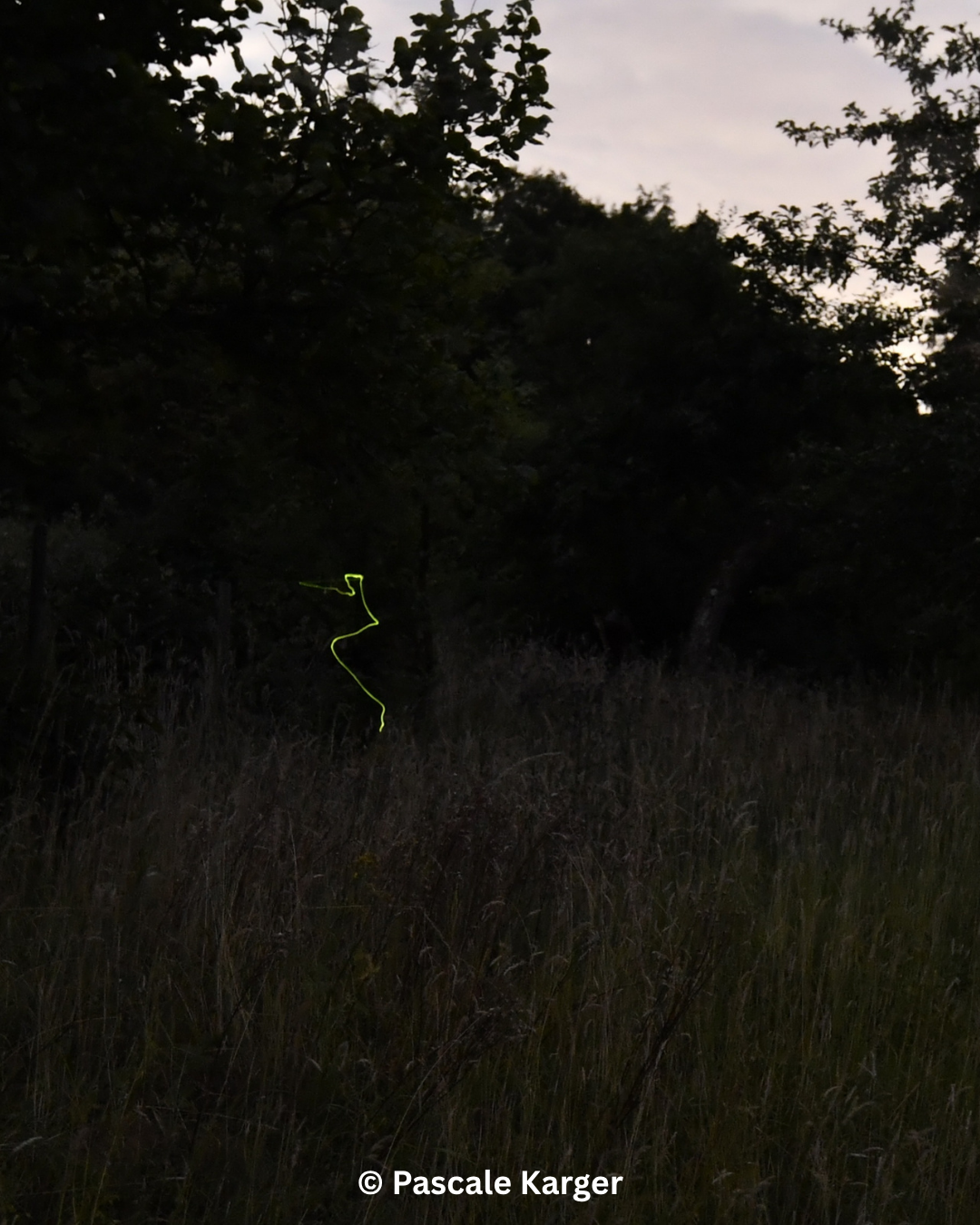
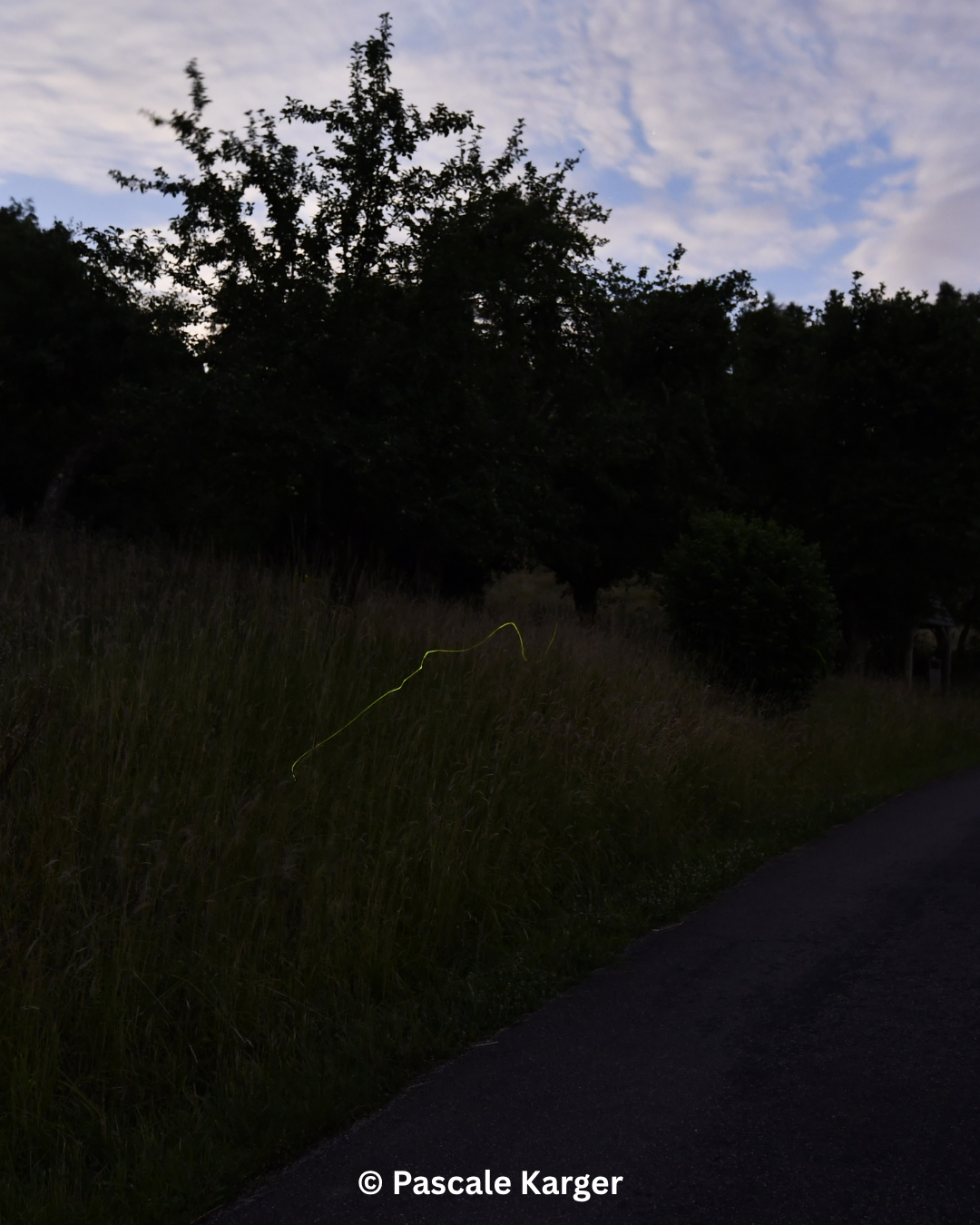
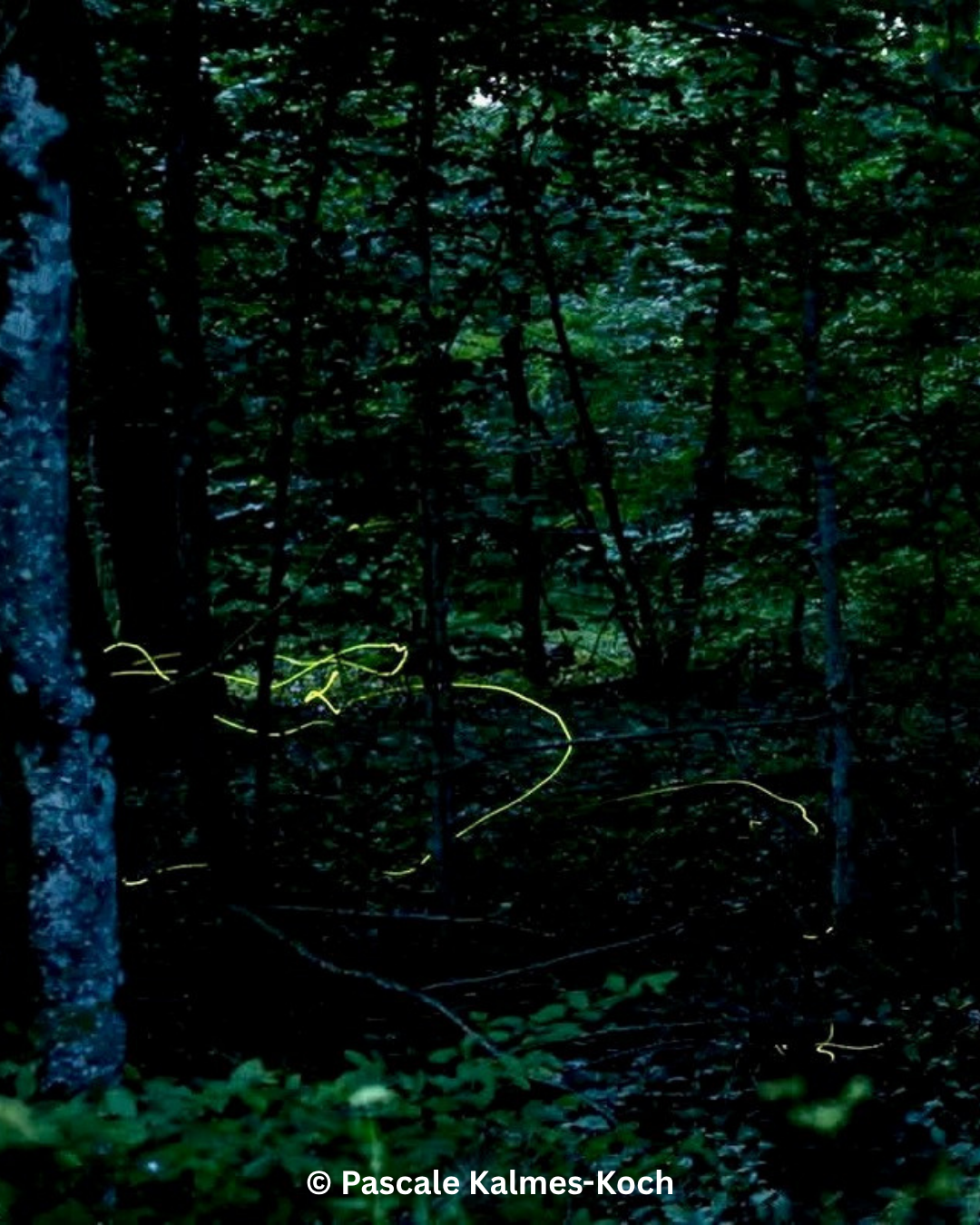
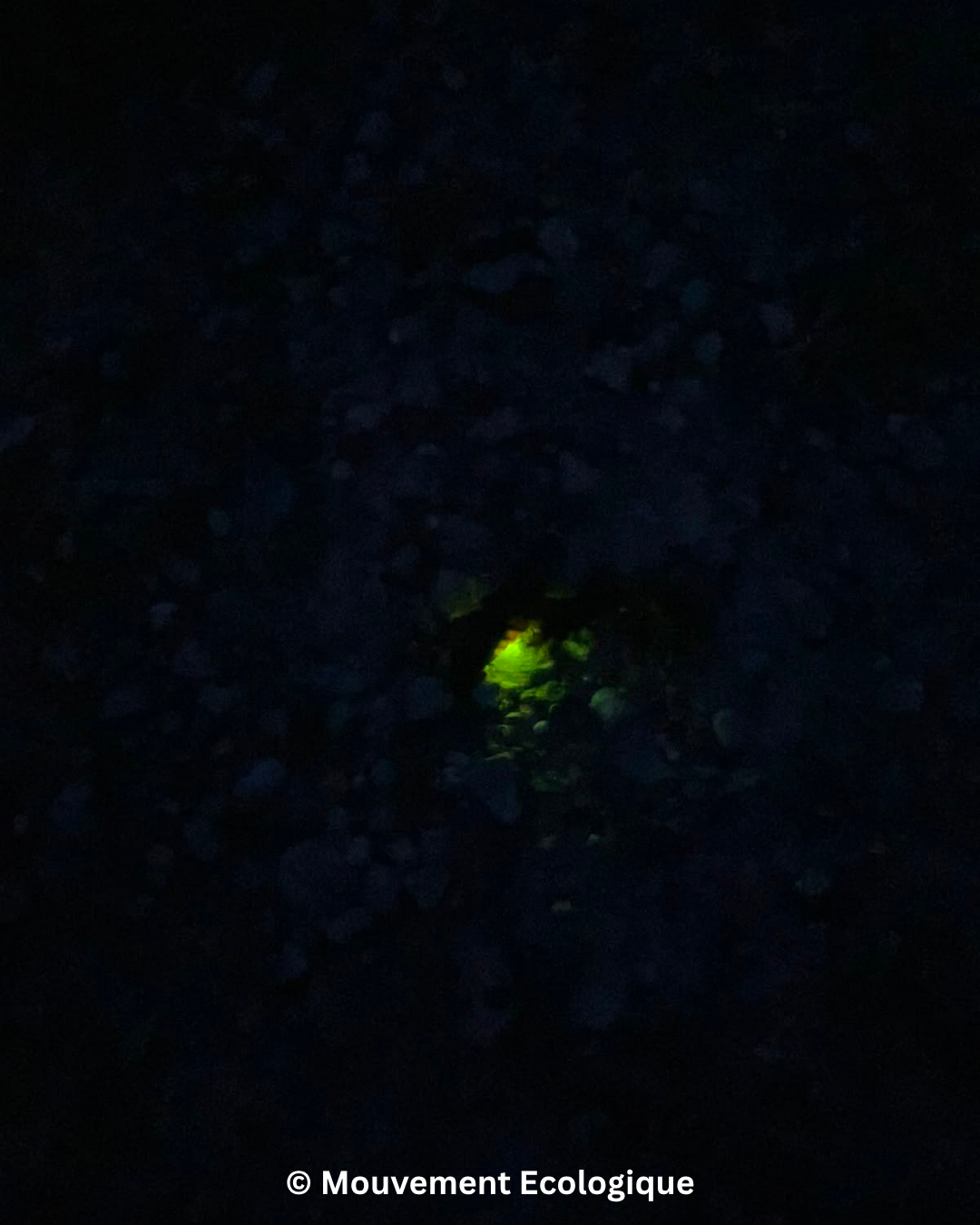
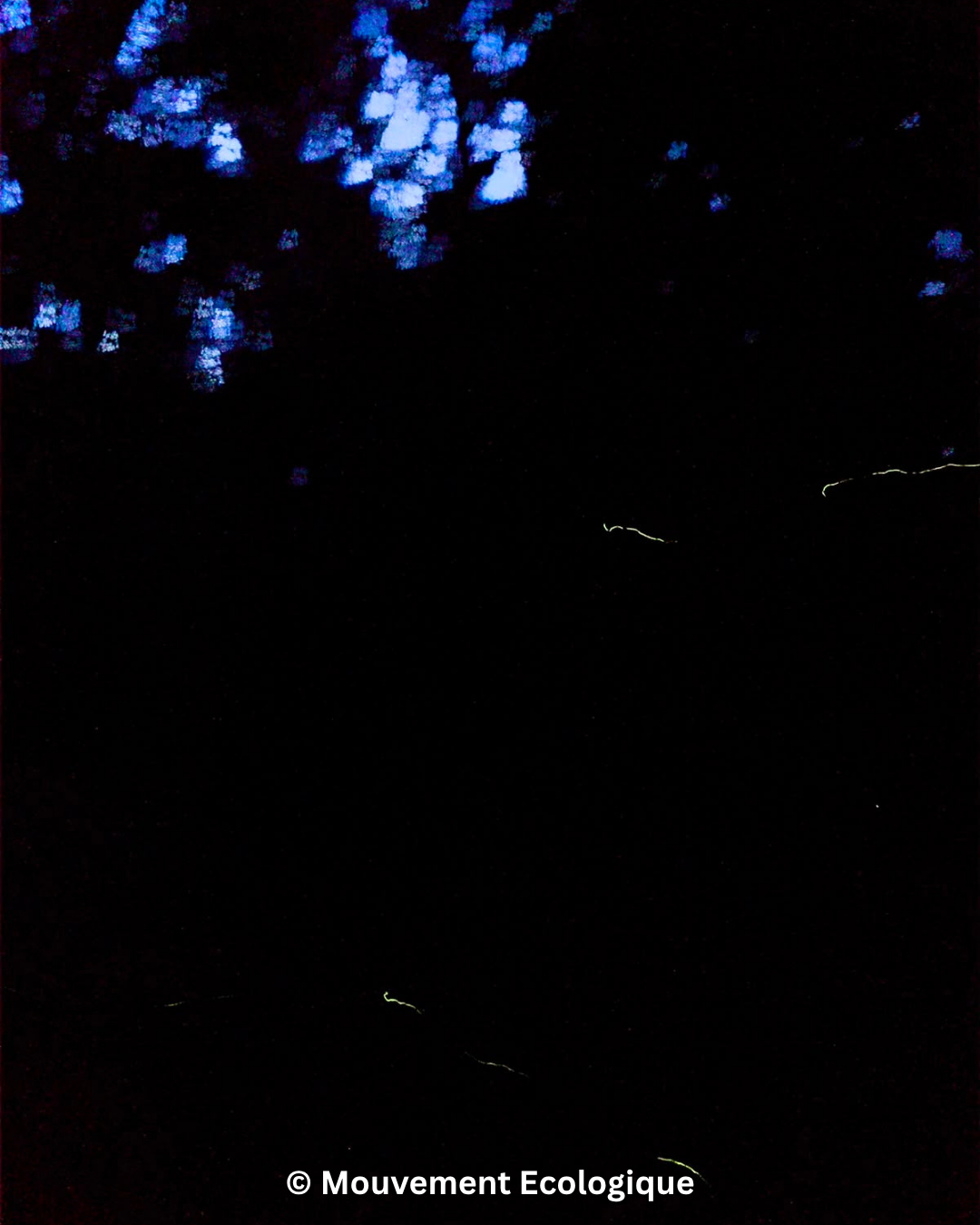
Some people also took photographs of the glowing beetles at their observation spots, allowing us to immerse ourselves once again in the magic of those moments.
A big thank you to the photographers!
translated by deepl.com
02.07.26