








Tripartite decisions: To be critically examined from the perspective of climate protection and the energy transition
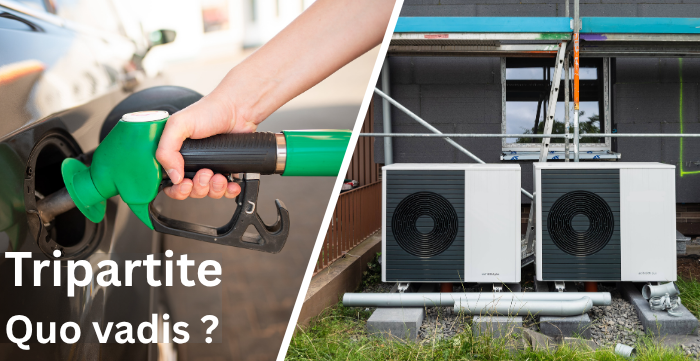
According to the government, the tripartite decisions are also a success in terms of the energy transition.
This assessment may well hold true in terms of ‘social peace’ in Luxembourg. From the perspective of climate protection and with regard to the energy transition, however, it must be viewed far more critically.
The current situation in particular highlights just how problematic dependence on fossil fuels is and how urgently greater independence from these climate-damaging energy sources is needed. Nevertheless, in accordance with the tripartite decision, the state intends to support the use of precisely these fossil fuels in a rather indiscriminate manner.
This does not promote the energy transition and contributes to shifting costs onto future generations.
The measures to reduce inflation must therefore be scrutinised very critically from an energy and climate policy perspective:
- Petrol and diesel are cheaper in Luxembourg than in neighbouring countries, yet the current ‘sourcoût’ is to be offset by 5 cents per litre. This decision sends the wrong signal, as the aim is actually to encourage people to switch to e-mobility. Furthermore, it is likely to accelerate fuel tourism, as fuel will become even cheaper compared to neighbouring countries.
This will make it all the more difficult to achieve the national climate targets. This is all the more regrettable as it is already known that Luxembourg will not achieve the e-mobility targets set out in the national climate and energy plan within the specified timeframe. The fleet would need to expand from the current 12% to 49% by 2030.
The government is also taking a scattergun approach here, as all households will benefit from the price reduction regardless of their income. The trade unions had at least proposed a ‘mobility bonus’ aimed solely at financially weaker households …. - Equally difficult to understand is the provision that ALL customers with an annual consumption of less than 25,000 kWh will receive a reduction in their electricity prices. It is important to note that – with a few exceptions – virtually all households fall below this consumption threshold.
The intended effect of this measure is therefore unclear; there is no clear incentive to make significant efforts to save electricity. The measure also appears to be aimed more at businesses than at households (which are difficult to distinguish within these categories). Furthermore, at four months, the duration of the measure is too short to achieve a genuine steering effect. It seems more like an additional, largely symbolic measure to demonstrate that the state does not solely promote fossil fuels.
Any additional mobilisation of public funds should be effective and create clear incentives that also ensure a structural impact of the funds deployed .
Why not, where appropriate, offer differentiated and potentially longer-term reductions for owners of heat pumps and electric cars, or for certain tradespeople? The answer is presumably that such an approach would not be technically feasible. This, at any rate, was the statement made in 2022 following the Russian attack on Ukraine. This raises the question: why has no work been done in the meantime to find practical solutions?
- The price reduction on gas and heating oil for everyone (!) is also a misguided decision in terms of climate policy. From an energy and fiscal policy perspective, it is a mistake for the state – that is, the general public – to finance such energy costs for people with sufficient financial means. It might have been appropriate to provide relief to low-income households through specific social measures (these households, moreover, have so far had hardly any means to invest in the energy transition). However, the blanket subsidisation of gas and heating oil is a misguided decision from both a financial and a climate policy perspective.
This assessment is also supported by international analyses. The International Energy Agency (IEA) points out that broad-based subsidies for fossil fuels are often poorly targeted and tend to disproportionately benefit higher incomes, whilst at the same time artificially weakening the competitiveness of lower-emission alternatives. Instead, the IEA emphasises that public funds should be channelled primarily into energy efficiency, electrification and renewable energy.
The government’s decisions thus run counter to the energy transition and represent a poorly targeted use of public funds. They contradict the warnings of numerous scientists who caution against blanket, scattergun-style price reductions.
This also raises the question: the geopolitical crises triggered by the struggle for energy will continue to affect us in the coming years, and no one expects energy prices to fall overnight … Does Luxembourg therefore intend to continue investing hundreds of millions in fossil fuels over the coming years in order to keep prices artificially low?
Measures contained in the Tripartite Agreement to promote the energy transition: unfortunately, they are completely inadequate
At the same time, the measures set out in the Tripartite Agreement to promote the energy transition are extremely vague and inadequate: highlighting an awareness-raising campaign as a tripartite decision or once again citing the ‘Simple. Clean. Renewable’ package of measures – which was agreed upon some time ago – does not do justice to the challenge.
This is all the more so given that the truly important levers were not identified in the agreement. Mouvement Ecologique had already outlined these in a detailed statement. These include, amongst others, the following measures:
- Revision of regulations to ensure that energy-efficient refurbishment also progresses in multi-occupancy buildings and the rental sector;
- Immediate pre-financing and the introduction of ‘social leasing’ for heat pumps;
- Uniform nationwide rules in the national building regulations for the installation of heat pumps;
- Clear statements on heating planning and the framework conditions for the design of heating networks;
- Removal of administrative hurdles and outdated provisions for the funding of renovation works in existing buildings.
- Greater direct government investment in the expansion of the electricity grid rather than subsidising grid costs, to ensure the most cost-effective use of these funds and reduce additional financial costs for taxpayers.
The agreement makes no mention of these or other relevant issues relating to the energy transition.
Conclusion:
The tripartite agreement does not advance the energy transition; on the contrary, various measures actually hinder it .
The losers are climate protection and the energy transition, as well as future generations. In this way, Luxembourg is neither reducing its dependence on fossil fuels nor strengthening its resilience in times of geopolitical crisis.
The state budget is also a loser: public funds are being sacrificed in a scattergun approach to promote fossil fuels, contrary to the goals of the energy transition, rather than being invested in the transformation of the energy system. But one thing is clear: if the state is now raising funds to invest in fossil fuels, elements of the energy transition must under no circumstances fail due to a lack of financial resources in the coming discussions. A prolonged duration of this crisis, which was recently classified by the Director of the IEA, Fatih Birol, as one of the most severe crises, would render this approach absurd: how long can the state and our society still afford this form of ‘relief’?
Anyone who does not drive the transition forward with sufficient determination today risks either the state having to invest hundreds of millions over many years in reducing energy prices – or having to accept an abrupt and socially and economically painful rise in energy prices later on. Delaying the transition does not reduce the costs; it merely postpones and exacerbates them.
10 June 2026