








They developed cancer and Parkinson’s disease due to pesticide exposure: Three affected farmers share their experiences – Representatives of French mutual health insurance organisations present concrete prevention proposals.
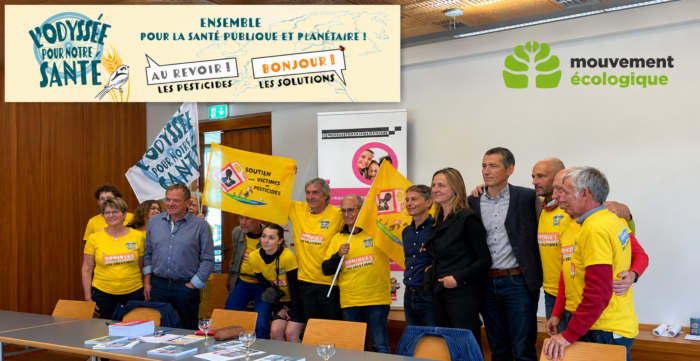
As part of a tour through five European countries under the slogan “Odyssée pour notre santé” (“Odyssey for Our Health”), several farmers affected by these illnesses also visited Luxembourg. Through a symbolic bicycle procession, they aimed to raise awareness of the serious health problems that can result from pesticide exposure and present their proposals to a wider audience.
It was impossible to listen to their stories without being deeply moved.
The day began with the cyclists arriving at the Oekozenter Pafendall, followed by a shared lunch and a press conference.
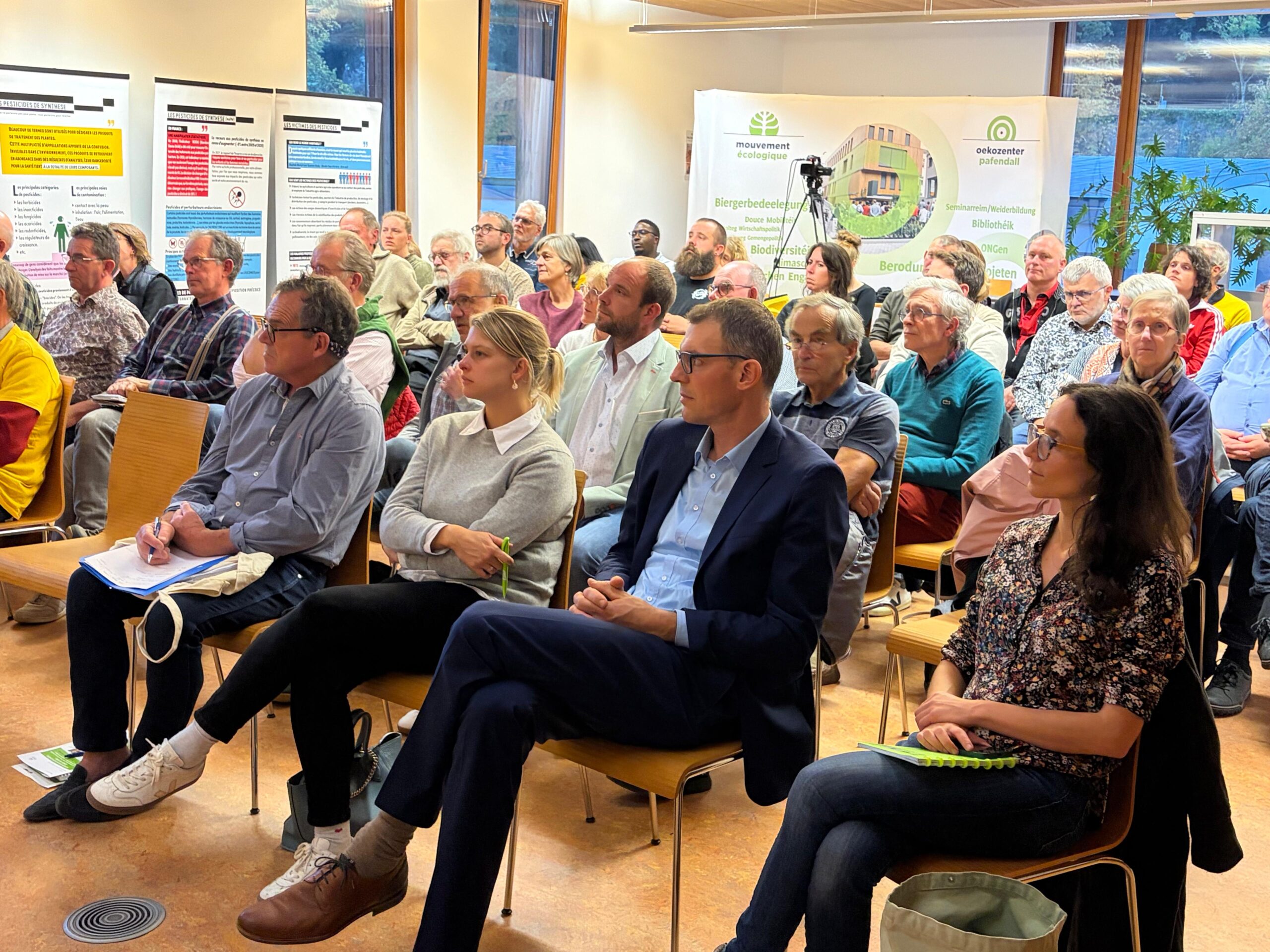
At 6:15 p.m., a public conference took place before a highly engaged audience. Among those attending were Jeff Boonen, Chair of the Agriculture Committee of the Luxembourg Chamber of Deputies; Christian Hahn, President of the Chamber of Agriculture; and Djuna Bernard, a Member of Parliament representing déi gréng (the Greens). Farmers, doctors, other representatives of the healthcare sector and interested members of the public were also present.
Widespread pesticide exposure among Luxembourg’s population
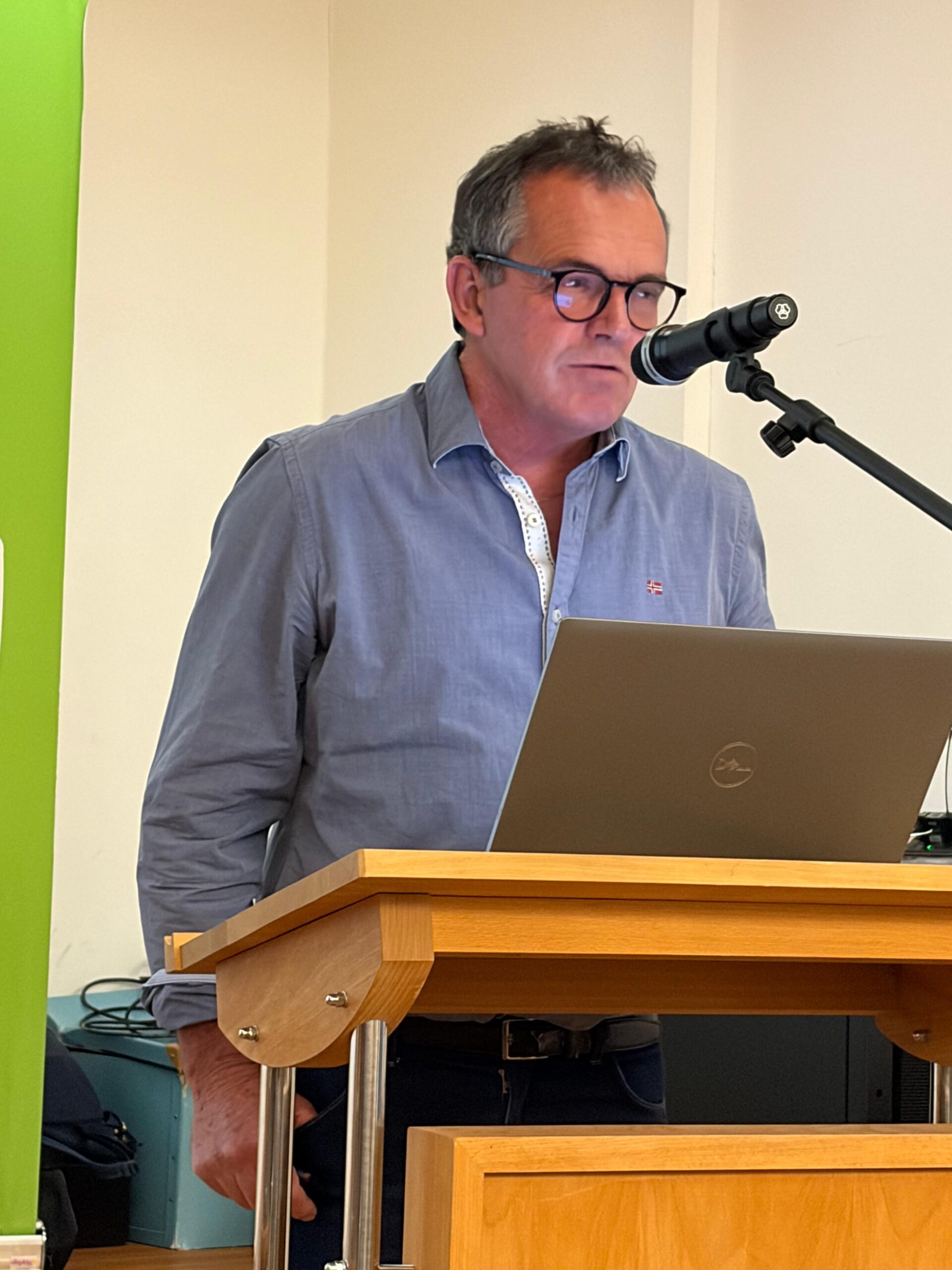
The evening began with a brief presentation by Roger Dammé from the Mouvement Ecologique, who outlined the findings of analyses concerning pesticide exposure in Luxembourg. These revealed that pesticide contamination affects the population of Luxembourg on a broad scale.
Mutual health insurance organisations take a stand against pesticide use
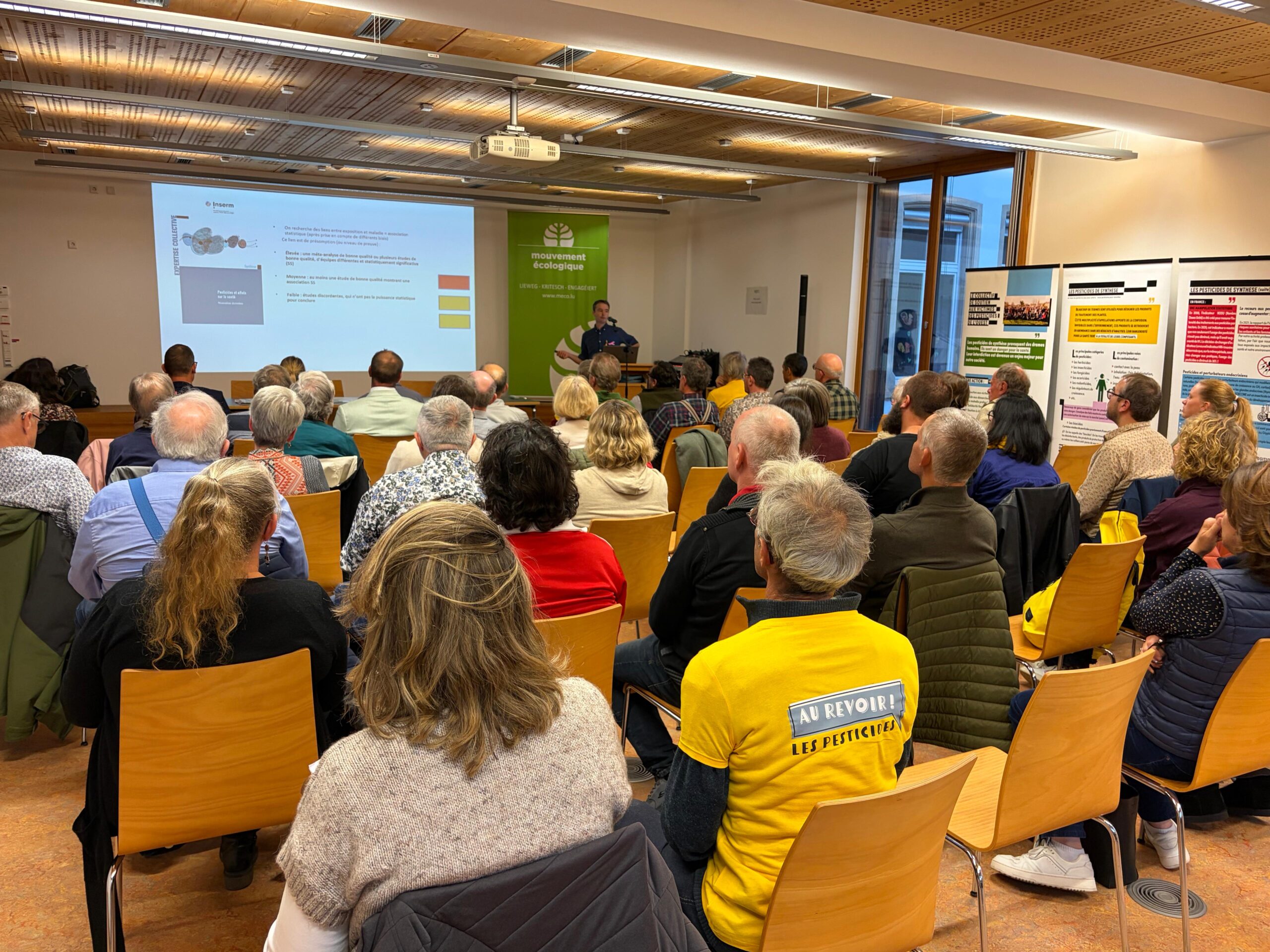
The second speaker was Martin Rieussec-Fournier, President of the Association des Mutuelles pour la santé planétaire, which represents 20 mutual health insurance organisations from France and Belgium. He introduced the campaign and explained that increasingly younger people are developing serious illnesses, and that the link between certain diseases and pesticide exposure is now scientifically well established.
He referred to scientific studies, including research conducted by Inserm, the Institut national de la santé et de la recherche médicale (French National Institute of Health and Medical Research), a public scientific research institution.
Even in France, it has been a long struggle to have certain illnesses caused by pesticide exposure officially recognised as occupational diseases. However, an increasing number of affected individuals are now coming forward.
Why are French mutual health insurance organisations advocating for reduced pesticide use? Beyond the obvious goal of protecting people from illness, they also aim to reduce long-term healthcare costs. The substantial expenses associated with pesticide-related diseases represent a significant financial burden for health insurance organisations.
Deeply moving accounts from affected farmers and a landscape gardener
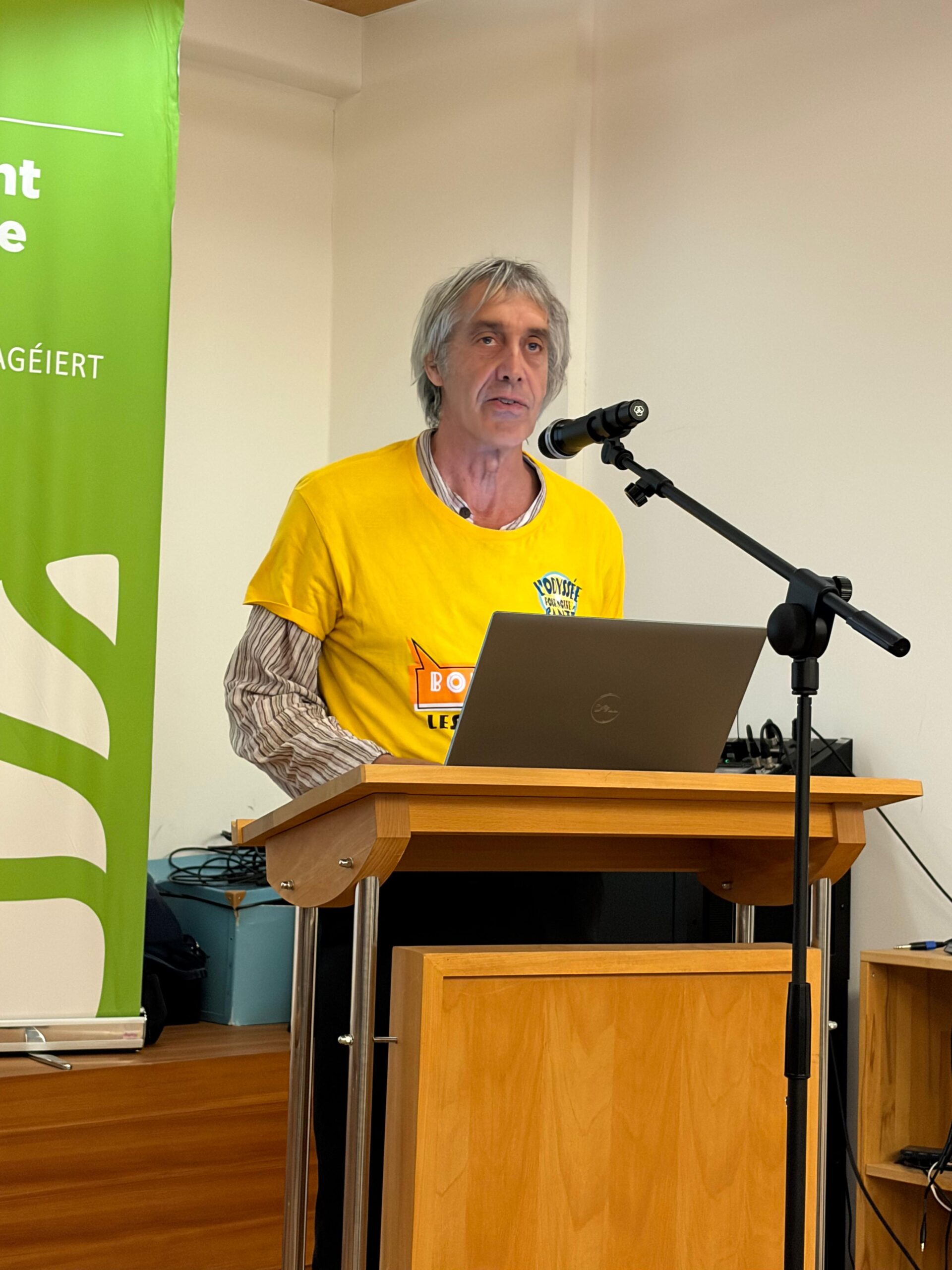
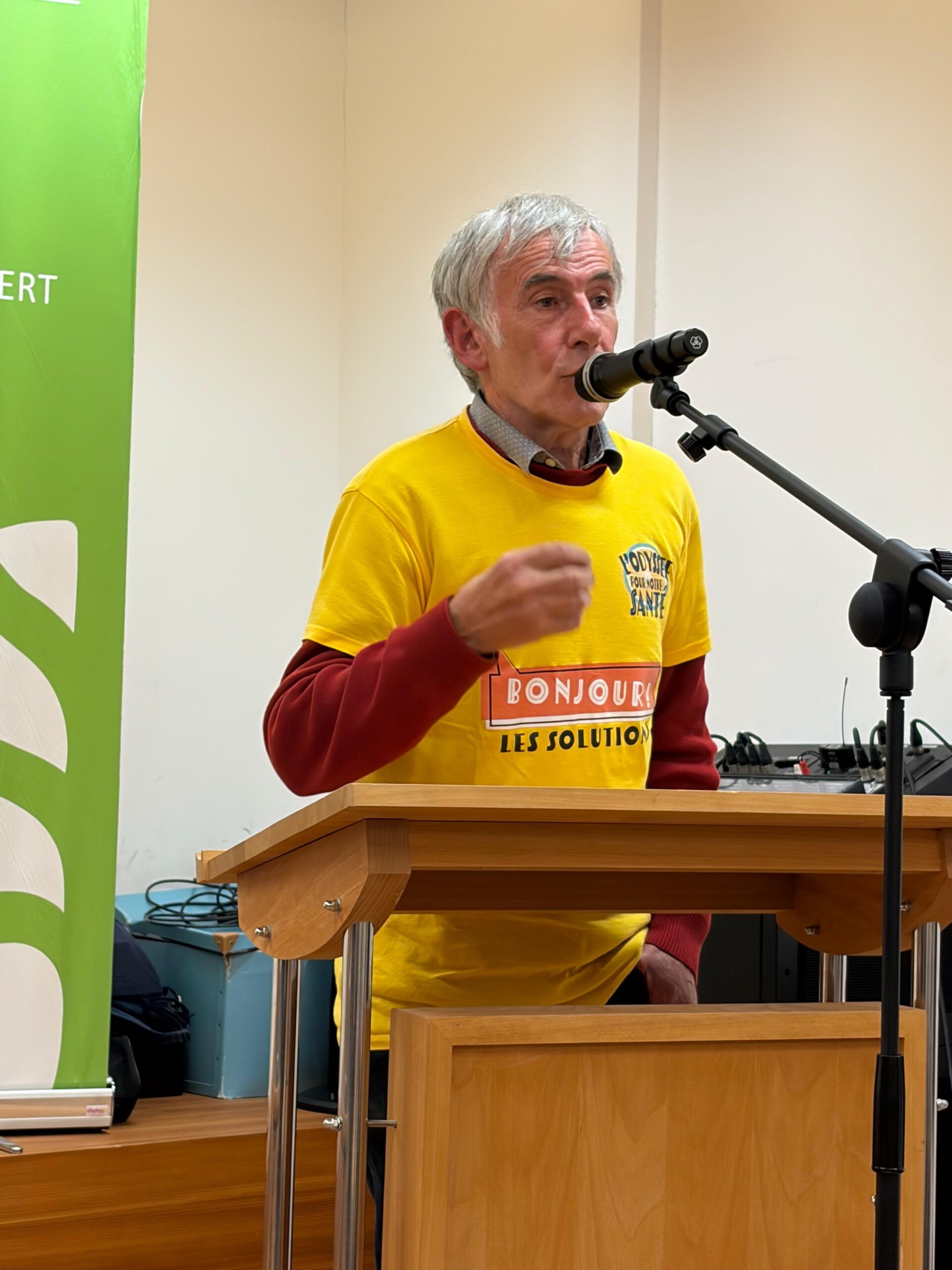
The most remarkable moments of the evening were undoubtedly the personal testimonies of three individuals directly affected by pesticide-related illnesses.
José Nadan and Denis Benoit, both farmers, developed prostate cancer, which has been officially recognised as an occupational disease.
They described how casually they had used pesticides in the past, without being aware of the risks. Today, they sometimes feel guilty and even ashamed, knowing that they worked with such toxic substances for years, endangering not only their own health but also that of their families and others.
They explained that they had been unaware of the dangers and had also acted under pressure to achieve high agricultural yields. Their mission now is to warn others about the devastating consequences of pesticide exposure.
In deeply moving words, they spoke about living with their illnesses and the profound impact these have had on their lives.
Daniel Bodénès, a landscape gardener, suffers from Parkinson’s disease. He began by apologising for any potential speech difficulties caused by his condition, although his presentation was delivered very clearly.
His illness is progressively worsening. Particularly distressing was the fact that he had run a business together with a partner who has also developed Parkinson’s disease.
Daniel Bodénès focused especially on the fate of those affected and on how little he had known about the dangers of pesticides when using them.
As highlighted throughout the presentations, one major problem was the misplaced confidence that individual protective measures, such as protective suits, could effectively prevent exposure.
According to the speakers, adequate protection is virtually impossible in practice. They stressed that the skin is a particularly important route through which pesticides can enter the body. Masks were described as offering limited protection, while protective suits could, in certain circumstances, even increase direct contact between pesticides and the skin.
Bayer (Monsanto) has spent USD 10 billion on a nationwide settlement in the United States. In other words, rather than risk a court ruling, the company chose to compensate affected individuals through a settlement. This is just one of many examples illustrating the seriousness of the situation.
The message of the evening was unequivocal: Pesticides must be banned, and pesticide-related illnesses must be recognised as occupational diseases!
The rollbacks currently being planned at EU level would be disastrous if implemented. Furthermore, organic farming must be significantly expanded.
One of the proposals presented was the introduction of a so-called “ordonnance verte” (“green prescription”) for pregnant women and children during the first 1,000 days of their lives.
This would involve financial support enabling families to purchase more organic food during this crucial period, even if such products are somewhat more expensive. According to the speakers, this is particularly important for unborn babies and infants during these early stages of development.
The evening left everyone present deeply affected. Lively discussions continued afterwards over drinks.
It should also be noted that, unfortunately, neither the Ministry of the Environment, the Ministry of Agriculture nor the Ministry of Health was represented, despite personal invitations having been extended to the respective ministers.
How much longer can Luxembourg’s political leaders continue to remain silent on this issue?
The following day, the Mouvement Ecologique and its guests were invited to speak to several classes at the Lycée technique agricole (Luxembourg’s agricultural school).
It is particularly encouraging that the school takes this issue seriously and provided both the affected individuals and the Mouvement Ecologique with an opportunity to raise awareness among its students.
Conference:
Press Conference:
Photos
22.10.2026