







School fruit and vegetable scheme 2026/27: Ministry of Agriculture once again misses the opportunity to promote sustainable agriculture and children’s health
The ‘School Fruit and Vegetable Scheme’: 472 tonnes of fruit and vegetables for schoolchildren – in theory, a golden opportunity and an effective tool for killing several birds with one stone: protecting children’s health, creating secure markets for domestic produce, strengthening local organic farming, and tackling the climate and biodiversity crises.
Unfortunately, however, the Ministry of Agriculture’s current call for tenders is once again heading in the opposite direction!
The current call for tenders for the ‘Schouluebstprogramm’ for the coming 2026/27 school year is open un until 21 September 2026[1] .
When it comes to the key factors – the proportion of organic produce, the balance between price and sustainability, the selection of climate- and environmentally-friendly varieties, and the strategic use of themed weeks – the Ministry of Agriculture falls far short of what is possible and necessary to tackle the challenges of climate change, the biodiversity crisis and the protection of public health.
In recent years, Mouvement Ecologique has already campaigned for reforms along these lines, but these have either not been adopted at all or only to a very limited extent. The only positive aspect of the new call for tenders is that the Ministry gives organic products a very slight higher weighting and, for the first time, now stipulates in the tender specifications that theme weeks for secondary schools must include visits to farms.
The Ministry of Agriculture is therefore sticking to a highly controversial and, in many respects, problematic tendering practice.
This approach is also far less forward-looking than that of the Ministry of Education for secondary school canteens, known as “Restopolis / Supply4future” – even though the Ministry of Agriculture is always keen to cite the procurement practice established by Minister Meisch as exemplary. The ‘school lunch tender’ is miles away from that of Restopolis in terms of sustainability, as the following analysis by Mouvement Ecologique shows.
- It is not the quality of the produce, health or biodiversity that take precedence – but, as ever, the price
Bids can be submitted for a total of seven different lots in the school fruit tender, five of which are for producers and two for distributors/suppliers. In all cases, price is the key criterion for awarding the contract, accounting for 50–75 per cent of the evaluation.
Although the scoring for organic production has been raised very slightly (from 25 to 35 points, or from 20 to 25 depending on the lot), this welcome yet tentative change does not remedy the fundamental imbalance between price and quality standards.
In contrast, in Restopolis’s procurement practice for food for the school canteens of the Lyzeen, price is only the third priority. The first and second priorities are organic production and regional sourcing.
Even though the EU provides the funding framework for the School Fruit Scheme, the Ministry of Agriculture would certainly have scope within the national co-financing share (50 per cent) to prioritise sustainability and future-oriented approaches. And given the importance of the issue, it should also be feasible for Luxembourg to forego part of the EU funding, if necessary, in order to apply stricter criteria. Last but not least, the question arises as to whether Luxembourg is advocating for an amendment to the programme at EU level in favour of organic farming. Austria, for example, demonstrates that more is possible under the same EU School Fruit Scheme: although the scheme is organised slightly differently – with schools making their own purchases rather than relying on a central tender and distribution process – they are reimbursed 70 per cent of the costs for purchasing organic products , which is significantly higher than for conventional products, where only 50 per cent of the costs are reimbursed.[2]
- Accordingly, Mouvement Ecologique is calling on the Ministry of Agriculture to follow the example set by the Ministry of Education and the Restopolis/Supply4future strategy in the ‘School Fruit Scheme’, and to prioritise organic production above all else, followed by regional cultivation and only then by price.
- Mandate organic produce – to protect children’s health and the environment!
According to the tender specifications, the only products that must be organically grown are still bananas and carrots. This accounts for around one third of the total quantity supplied: 141 tonnes. An impressive figure at first glance.
However, it is important to bear in mind that, for the majority of this fruit – bananas account for 87 per cent of the 141 tonnes – Luxembourg imposes organic production standards on producer countries in the Global South, standards which we do not ‘wish’ to adhere to for goods produced in Luxembourg or Europe. This is a complete contradiction, which is utterly shameful and hypocritical.
Consequently, the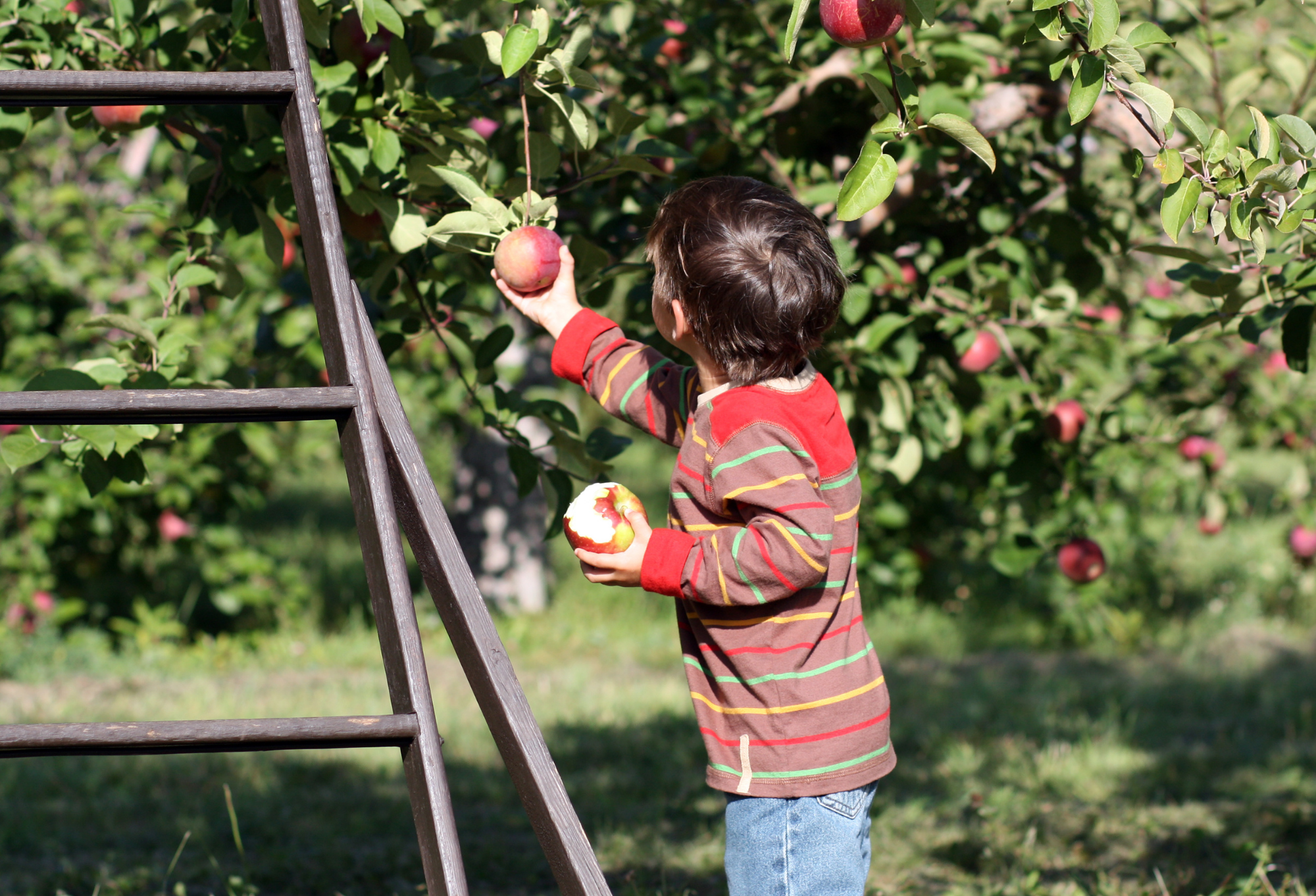 expansion of organic farming in Luxembourg is hardly encouraged at all, apart from those few tonnes of carrots! This is despite the proven negative effects of conventional farming – which relies on synthetic chemical pesticides – on insects, soil organisms, soil and water quality[3] and, ultimately, on human health (see below).
As for other fruit – such as apples, pears and the rest of the range – there is no fixed priority given to organic farming – only an aggregate minimum quota of 10 per cent. In practical terms, this means that, calculated over the course of the year, at least 10 per cent of the range must be organic, but the supplier is free to decide during which period or for which fruits. There is therefore no fundamental guarantee that, for example, apples in particular will be organic. Incidentally, the organic carrots already account for 7 per cent of this 10 per cent…
Furthermore, it is incomprehensible that, apart from organic bananas, there is not a single compulsory organic fruit or vegetable item for secondary schools. There is no equivalent to the organic carrot provided in primary schools. It remains unclear why this should not apply to secondary school pupils when it does apply to primary schools.
This approach is utterly baffling, given that analyses by the local food laboratory ALVA, run by the Ministry of Agriculture itself, show that conventionally grown apples in particular regularly contain multiple residues of many different pesticides – the so-called ‘pesticide cocktails’. There are simply no limit values for this multiple contamination! The current twisted logic is: no limit values – no health risk. Yet it must be assumed that these ‘cocktails’ in particular are especially problematic (primarily due to synergistic effects) – even if the individual substances comply with their respective standards.
As scientific evidence continues to mount that regular exposure to active ingredients in pesticides (and mixtures thereof) poses significant health risks[4] , exposure should be kept to a minimum, particularly for children – and accordingly also in the ‘Schouluebstprogramme’. from the Luxembourg Institute of Health (LIH) showed as early as 2022[5] that all the children tested had pesticide residues in their hair. The analysis also shows that a diet consisting of organic food demonstrably reduced this exposure. Organic fruit is far less contaminated (either not at all or in lower doses) and should therefore be clearly preferred.
And what is the current state of organic farming in Luxembourg itself? In the school fruit scheme, the minimum 10 per cent organic quota has remained unchanged for years – even though a firm public purchase guarantee could be precisely the incentive local farms need to switch to organic farming. However, depending on the source, the area under organic cultivation in Luxembourg is stagnating at 7–10 per cent of the total agricultural land. Reliable public demand would provide the boost the sector needs. Yet the Ministry of Agriculture is not utilising this lever in the school fruit scheme. Unlike the Ministry of Education with ‘Restopolis’.
- The Mouvement Ecologique expects the Ministry of Agriculture – following the example of the Ministry of Education – to set higher procurement quotas for organic produce and to clearly state that these quotas will be gradually increased over the coming years. This would provide producers with planning certainty and increase the incentive to become active in this sector.
- Instead of problematic variety specifications, move with the times: introduce future consumers to resistant and pesticide-free varieties
The tender appears outdated and rather monotonous as regards the specified apple varieties: Gala, Elstar, Golden Delicious, Jonagold. For pears, only ‘Conférence’. All four apple varieties are conventionally bred varieties with a known high susceptibility to scab and mildew – resulting in a correspondingly high need for fungicides.
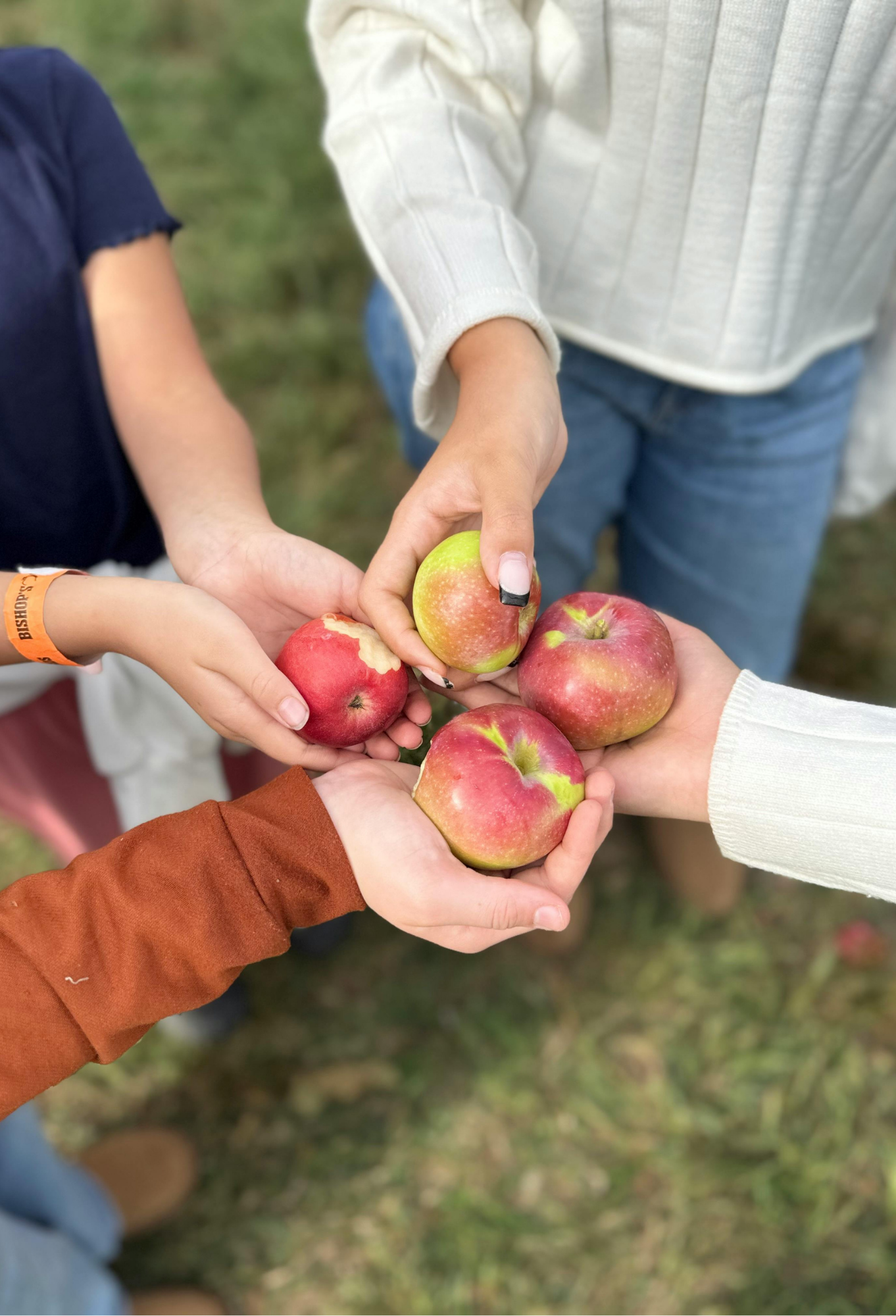 Yet more robust alternatives that require significantly less pesticide – and which have proven their worth on the market – have long been available. Among others, Topaz and Santana are already being grown and sold in Luxembourg[6] , whilst the Natyra and Pinova varieties, bred for organic cultivation, are available in organic shops.
At present, the criteria for the varieties put out to tender appear to be based on ‘appearance’ – the colours and flavours expected by consumers. Truly important criteria, such as reduced need for plant protection products, more resistant varieties, etc., play no part.
It is well known that the market is often very slow to respond to innovations, and new varieties cannot easily be introduced to the public in supermarkets. Without further explanation, consumers on the shop shelves simply prefer to reach for familiar names such as Gala or Elstar rather than Natyra or Pinova. Yet it is precisely during the themed weeks (where the contract award is conditional on a school class visiting the farm or a presentation on production) that an opportunity for hands-on awareness-raising would arise: producers can explain to the children why a resistant variety requires fewer plant protection products, why that is a good thing, how it tastes, and why it looks different. Old varieties from mixed orchards could also be used here to familiarise children with this important aspect of Luxembourg’s fruit growing – which plays a major role in nature conservation. Children who have seen and tasted a variety on the tree can take this knowledge and preference (and perhaps even a sample?) home with them. Yet this is precisely not the case. The themed weeks are not being used to introduce children to new, more resistant varieties and to encourage them to develop a taste for them.
- The Mouvement Ecologique is calling for a minimum proportion of resistant varieties to be included in the specifications, or at least for bonus points to be awarded for them. This would provide consistent support to fruit growers, whether organic or not, in reducing their use of pesticides.
Furthermore, the potential of the themed weeks should be better utilised – as a market development tool for new, resistant varieties, for varieties found in traditional orchards, for sustainable cultivation in general, and as an experience in the sense of the ‘école du goût’. This should be achieved through an explicit requirement to this effect in the tender specifications, or at least as a bonus criterion.
- The heatwave year of 2026: Strict aesthetic requirements and price pressure are now more than ever the wrong signal
The specifications regarding size and weight (primary school apples: 65–70 mm, max. 160 g; secondary school apples: 70–75 mm, max. 220 g) are very narrowly defined in the tender. They favour conventional varieties that prioritise yield and appearance. Hardy varieties and apples from organic cultivation or orchard meadows exhibit a wider range of appearances, sizes and shapes – meaning they are at a significant disadvantage.
2026 illustrates how the situation could worsen: the heatwave has had significant consequences for fruit growing, including in Luxembourg. The National Fruit Growers’ Association reports losses due to sunscald, but notes that smaller fruits are also a result of the heat[7] . It is precisely these fruits that fall outside such a size specification. And we must expect recurring heatwaves in the future.
However, this is no reason to abandon sustainability criteria – quite the opposite.
- The Mouvement Ecologique suggests broadening the tolerance levels for size and weight specifications so that disease-resistant varieties and organically grown fruit are not structurally disadvantaged. And it highlights how urgently regional, sustainable agriculture needs reliable purchase guarantees and fair prices, rather than being put under additional pressure by strict aesthetic standards in what is already a difficult year. Anyone who wants local farms to switch to organic farming and hardy varieties must give them planning security, especially now.
The demands of the Mouvement Ecologique:
Mouvement Ecologique calls on the Ministry of Agriculture, building on the highly acclaimed Restopolis/Supply4future programme, to ensure in the next call for tenders that:
- give priority to organic fruit and to prioritise organic production first and regional sourcing The price criterion should only come third;
- Raise the minimum organic quota requirement to well above 10 per cent and extend it to all fruit categories;
- To introduce a compulsory portion of organic vegetables or fruit for secondary schools as well, analogous to the organic carrots provided in primary schools;
- To stipulate a minimum proportion of climate-adapted, fungus-resistant apple and pear varieties in the specifications (e.g. Topaz, Natyra) or at least to award bonus points for them;
- To make targeted use of educational theme weeks to introduce resistant varieties – raising children’s awareness of varieties, organic farming and their flavour;
- To fundamentally revise the aesthetic specifications (size, weight, etc.) so that resistant varieties and organic apples are not structurally disadvantaged;
- To actively advocate at EU level for a reduction in the 50 per cent price weighting and to make consistent use of national leeway to incorporate sustainability criteria;
- Communicate a multi-year procurement strategy to producers at an early stage. This gives farmers planning certainty for the transition to organic farming and more robust varieties.
This is in the interests of biodiversity and health protection, as well as strengthening regional organic farming. But it is also in the interests of social justice: particularly in schools, children from all households should have equal access to healthier food.
September 2026
You can download the statement here.
[1] https://agriculture.public.lu/de/aktuelles/2026/august/appel-d-offres-schouluebstprogramm.html
[2] BMLUK “The EU School Fruit, Vegetables and Milk Scheme”: https://www.bmluk.gv.at/en/topics/food/eu-and-international/the-eu-s-school-programme-for-fruit-vegetables-and-milk.html
[3] Geissen, V., Silva, V. et al. (2021): Cocktails of pesticide residues in conventional and organic farming systems in Europe – Legacy of the past and turning point for the future. Environmental Pollution, 278: 116827; Daelemans, T. et al. (2025): The effects of organic and conventional apple orchard management systems on biodiversity: A multi-taxon study with a semi-natural benchmark. Basic and Applied Ecology, online first; Goritschnig, L. et al. (2024): Ecotoxicity of pesticides approved for use in European conventional or organic agriculture for honeybees, birds and earthworms. Environments 2024, 11, 137
[4] Sarr, A. et al. (2026) Health Effects of Chronic Low-Dose Exposure to Pesticide Mixtures: A Systematic Review, Journal of Environmental Protection. Available at: https://www.scirp.net/pdf/jep_6705682.pdf.
[5] https://www.lih.lu/de/article/bis-zu-88-verschiedene-schadstoffe-in-den-haaren-luxemburgischer-kinder-gefunden/
[6] https://eistuebstagemeis.lu/produzenten/steeseler-uebstbau-genossenschaft/
[7] https://100komma7.lu/news/No-veier-Hetztwellen-Wei-steet-et-em-den-Uebstbau-hei-am-Land?pd=noriichten