








Bascharage bypass: Let’s change course!
APPEAL TO POLITICS AND SOCIETY AT THE START OF THE PARLIAMENTARY SESSION
20 September 2026
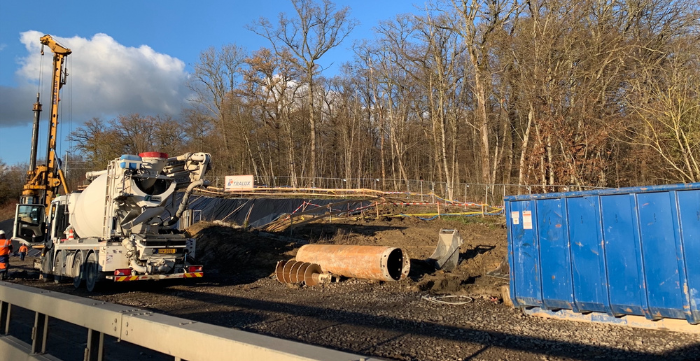
Construction work on Phase 1 (N5 – industrial zone) of the Bascharage bypass is scheduled to begin this autumn/winter. By doing so, the Ministry of Public Works and the Roads and Bridges Administration (Ponts & Chaussées) intend to create a fait accompli – even though the project remains subject to legal challenge. In the tender procedure, construction companies were explicitly excluded from claiming any compensation in the event that the works are halted by a court decision. Indeed, on 14 December 2026, the Administrative Court is due to consider the application for the annulment of the authorisation.
- The arguments put forward by the applicants, namely BIGS and the 10 affected private individuals from Bascharage and Sanem, are based on numerous factual and procedural aspects of environmental legislation.
- Since the “Dippach bypass”, as part of the “Bascharage-Dippach bypass” between the border region and Luxembourg City, has been called into question both by the Dippach municipal authorities and by the Minister for Mobility, the only remaining justification is the direct connection of the Bascharage industrial zone to the A13 motorway through two forests. Not even this justification has been substantiated by traffic measurements.
- Two forests, one of which, the Zämerbësch, is already a Natura 2000 site, while the Bobësch has been designated as such, would fall victim to this decision. During this summer’s heatwave, we all (re)discovered the many benefits provided by forests and nearby recreational areas. The Bobësch, as an “ancient forest”, is also particularly valuable and rare. The route currently planned would permanently destroy its integrity and its functions as a habitat for fauna and flora and as a store for water and CO₂ – not least because of the consequential damage, which should not be underestimated. In addition, its special protection status as a designated Natura 2000 site would be disregarded.
- Only a few of the environmental requirements and compensation measures have so far been fulfilled or can realistically be fulfilled at all. This summer in particular has shown that extreme heatwaves make the planting of new trees even more difficult, although new trees cannot replace an old and valuable tree population in any case. Furthermore, the most costly measure – the wildlife bridge over the A13 that is currently under construction – would make the most sense if the bypass did not once again interrupt or restrict wildlife corridors.
- The proposed “0+” alternative has never been seriously examined. It could combine all the opportunities offered by free public transport (effective bus-rail connections), together with traffic-calming measures in towns and villages and new cycling connections, including routes away from existing roads.
- We have challenged the water management authorisation for the bypass, because it does not provide adequate solutions for the additional pressure the bypass would place on the public sewerage system and the Chiers, including its wetland area in the “Dreckwiss”. The real risk of flooding in this area has also not been taken into account. The start of construction work would immediately affect the “Pawuesgriecht” stream.
- Not all of the required land is yet owned by the State or secured by contracts. Moreover, even the decisive prerequisite for the authorisation currently being challenged before the courts (the Saint-Gobain variant), namely the relocation of this company, has still not been confirmed.
There is still time to change course.
We firmly believe that, in times of climate crisis and biodiversity loss, a fundamental priority for policymakers should be to refrain from destroying further forest areas and protected natural sites and to seek alternatives.
At the very least, we call for the final court decision to be awaited and for construction not to begin now. If the construction authorisation is annulled, the works would not only result in irreversible and unnecessary environmental destruction, but also in pointless costs for the public.
Questioning decisions that are based on false assumptions and whose impacts prove harmful to people and the environment is the order of the day. Responsible policymaking means recognising misguided decisions in time and preventing their implementation before it is too late. Limiting the damage by no means represents a step backwards, but rather a step forward. Respect to those who recognise this and act accordingly!
BIGS a.s.b.l. Mouvement Ecologique Régionale Sud natur&ëmwelt Sektioun Kordall