






Ministry of Agriculture’s organic action plan for organic farming PAN-Bio 2030: Lack of political direction for a forward-looking agricultural policy – proposals for the necessary course correction
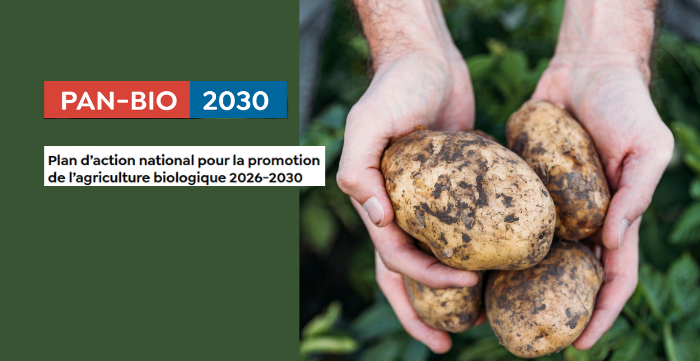
Shortly before Christmas, the Ministry of Agriculture presented its long-awaited action plan for organic farming, PAN-Bio 2030.
Mouvement Ecologique and other stakeholders in the sector had already suggested to the Minister of Agriculture months ago that a dialogue on this important action plan be held with all stakeholders concerned.
Unfortunately, there was no willingness for constructive dialogue in advance, so Mouvement Ecologique can only comment on the plan as presented. Constructive involvement in advance would have been far more effective.
Unfortunately, the action plan that has now been presented falls far short of what is needed.
The fact is that, as recent scientific studies show, organic farming protects biodiversity far more effectively[1] than conventional agriculture, which in its current form is unfortunately a major contributor to the destruction of natural habitats and the dramatic decline in species.
Organic farming is also absolutely advantageous from a financial policy perspective, as it eliminates the high costs associated with reducing nitrate pollution from conventional agriculture and reducing agricultural pesticides in drinking water, among other things. This is because organic farming avoids such pollution in the first place. The same applies to persistent chemicals and much more.
The evidence that organic farming is preferable from a health perspective (both due to the lower pesticide input into our ecosystems and the lower contamination of food with undesirable substances, for example) has also been known for a long time.
Organic farming serves as a pillar for the preservation of the cultural landscape and the common good in an outstanding way and must therefore be the central element of the agro-ecological transformation, especially in the interests of farmers. Organic farming is also far less exposed to the global market and the geopolitical situation, which is particularly relevant in today’s times of crisis.
With this critical analysis, Mouvement Ecologique wishes to contribute to ensuring that PAN-Bio 2030 develops with twice the impact, and that course corrections are made and implemented. In doing so, it is essential that there be an exchange with the stakeholders concerned, at least in the design of the individual measures, if this was not already desired during the drafting of the plan.
This is because many of the points raised by Mouvement Ecologique could still be addressed now, provided there is the political will to do so. They do not conflict with the Bioaction Plan.
It should also be mentioned that Mouvement Ecologique fully supports a number of the measures listed in the plan (as they are already included in PanBio 2025). However, this does not alter the central weaknesses of the action plan.
[1] https://www.mnhn.fr/fr/alerte-presse/une-nouvelle-etude-montre-que-la-plupart-des-especes-d-oiseaux-en-france-sont-plus
You can download the statement and the joint letter (french) here.
Translated by deepl.com
January 22nd .2026