








Episode 9: The Large Marsh Grasshopper
With the new ” Lend an ear to nature” campaign, the Mouvement Ecologique wants to draw attention to these often-threatened species and their habitats – and combine it with a guessing quiz on the noise of the animal in question.
A total of two short videos on a species of animal from our localities and landscapes will be published each month from the end of April until October.
Guess with us – which animal is making that sound? and win a Naturata voucher worth €50 per spot!


Copyright: Aiwok
Did you recognise the Large Marsh Grasshopper in the clip?
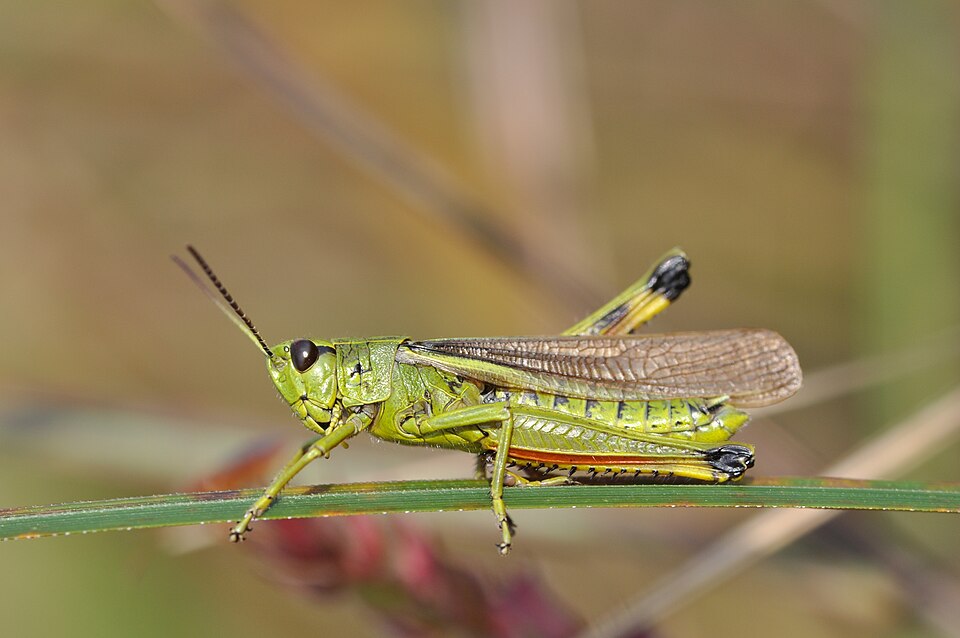
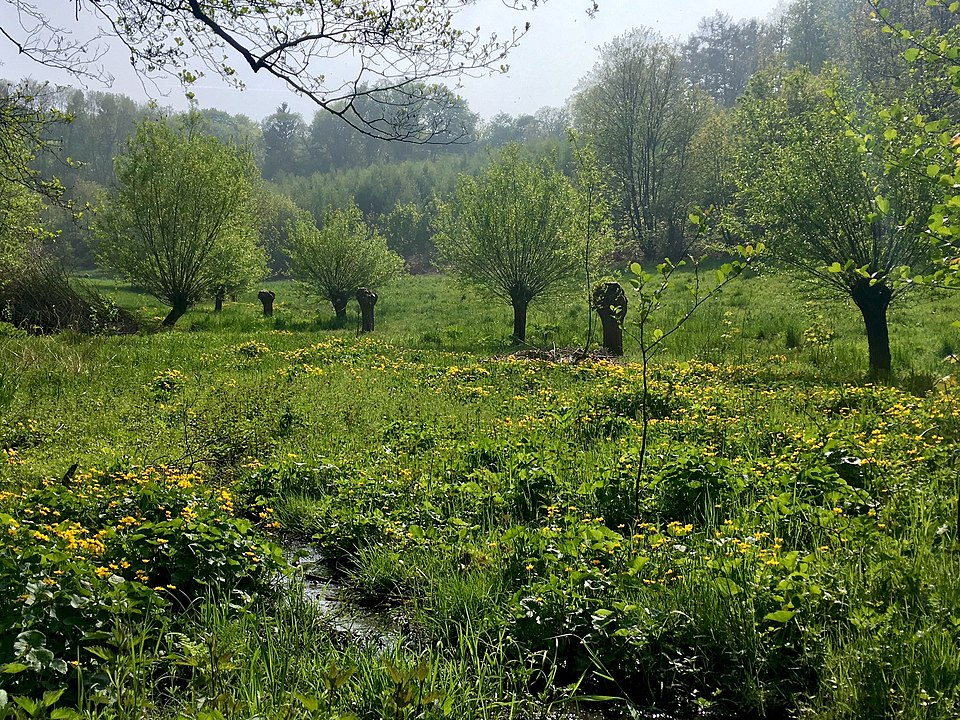
All grasshoppers chirping? Then you’ve probably never heard the large marsh grasshopper: ‘Tick – tick – tick!’ is the sound that can be heard in midsummer from very specific places. The large marsh grasshopper, a rather striking member of the grasshopper family, is found in our countryside mainly in damp meadows, ditches or on fallow wetlands.
The unusual and unique ticking sound is made when the large marsh grasshopper jerks one of its colourfully patterned hind legs over its wings. It’s worth taking a closer look: the black-coloured knees, bright red undersides of the powerful hind legs and yellow shins armed with black thorns make it one of the most beautiful native grasshoppers. The basic colour of the body is usually green, but there are colour variations, especially in females, where the animals are reddish in colour – a reference to the French suffix ‘ensanglanté’.
Listen carefully on your next walk across the countryside – you might spot them at the edge of a ditch or among the tall grass of a wet meadow!
Way of life
There are around 50 different species of grasshopper in Luxembourg, each with its own requirements. Some love dry, sunny soil with stones, others live in trees. The large marsh grasshopper, on the other hand, needs moisture – as its name suggests.
In summer, the adult animals live in dense vegetation in damp meadows, fallow land, sedge marshes or on the banks of ditches. They feed mainly on a variety of grasses. The large marsh grasshopper lays its eggs in the ground or close to the ground between plants. It is important that the location remains sufficiently moist, otherwise the eggs will dry out or the hatching larvae will not survive. Scientific studies have shown that the large marsh grasshopper is therefore bound to locations that are at least temporarily flooded in winter.
The animals go through five larval stages before becoming active as adults (imagoes) between June and September. Only in the adult stage do they produce the ticking sound. This ‘song’ serves the males to mark their territory and attract females – it can often be heard clearly in the early evening. Incidentally, the marsh grasshopper is one of the few species of grasshopper in which the females can also produce a soft clicking sound.
Copyright: Cavethebrave
Threats to the large marsh grasshopper
In the past, there were significantly more wet meadows and marshes in Luxembourg, but many of these have been drained over the decades to make them more suitable for agriculture. Other areas were left fallow, i.e. they were no longer cultivated because they were not economically viable. Gradually, shrubs and trees grew there, causing the open, herb-rich habitats to disappear.
Added to this is the intensive use of the remaining meadows: excessive mowing, heavy fertilisation and the loss of structural diversity (small elevations, wetter depressions, herb-rich edges, etc.) are harmful to this sensitive species. Its eggs need permanently moist and undisturbed conditions, which are often no longer found in heavily used areas.
Distribution in Luxembourg
Despite its specific habitat requirements, the marsh grasshopper is surprisingly one of the more common grasshopper species in Luxembourg. It appears to be relatively adaptable and can even survive in smaller, extensively used areas – for example, in tall grass around a ditch that is mowed less frequently inmidst of an intensively used meadow.
This is partly due to its good flying ability, which allows it to colonise new habitats (temporarily). However, in the long term, it needs larger, contiguous wet habitats that are used regularly but carefully.
Because it is primarily dependent on extensively managed meadows, ditches and wet fallow land, it is an important indicator species for near-natural, structurally rich wetland habitats – habitats that are also becoming increasingly important for us humans in the wake of climate change.
This is because wetlands act like natural sponges in the landscape, storing water during heavy rainfall and slowly releasing it again during dry periods. They thus protect against both flooding and droughts.
How can I help the marsh grasshopper?
- Protect and restore wet meadows
Support nature conservation organisations that maintain, restore (‘renature’) or campaign for wetlands – this creates habitats for the marsh grasshopper and many other species that also benefit us. Actively approach your local council to ensure that such projects are implemented on their land. - Protect the landscape and nature through conscious consumptionBuy products from farmers who use organic or natural farming methods, e.g. hay from unfertilised meadows or meat from extensive grazing: https://agriculture.public.lu/de/veroeffentlichungen/ernaehrung/bio/einkaufsfuehrer.html. Projects such as ‘Natur genéissen’ in Luxembourg also promote such farms: https://naturgeneissen.lu/
- To help grasshoppers in general: Mow your lawn less often and in sections
Less is more: whether in the garden or in the open countryside, lawns ore meadows should only be mowed once or twice a year – as late as possible and never completely, so that refuges for butterflies, grasshoppers and other insects are preserved with each mowing. Avoid using fertilisers and pesticides.
Further information and sources can be found here:
- orthoptera.ch – specialist portal on grasshopper fauna in Central Europe: https://www.orthoptera.ch/wiki/arten/caelifera/oedipodinae/item/stethophyma-grossum (in German)
- BUND – ‘Ach du Schrecke!’ (Oh, you grasshopper!) – article about the vocalisations of grasshoppers: https://www.bund.net/bund-tipps/detail-tipps/tip/unser-tipp-im-august-ach-du-schrecke/ (in German)