







And Groundhog Day continues… No progress on school fruit tenders!
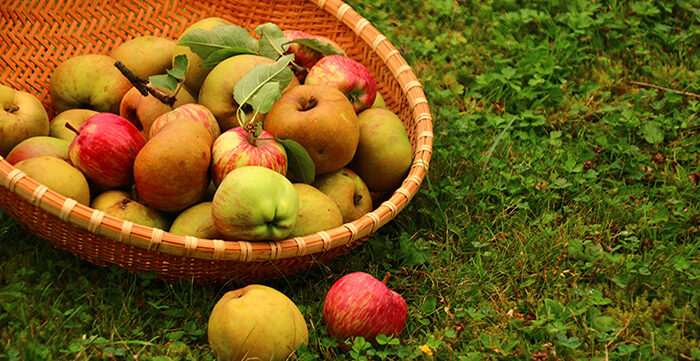
Until September 1st, the tender for fruit distributed by the state in schools for the year 2025-2026 was open for the 17th time. We are talking about a whopping 156 tons.
When selecting which school fruit to distribute, the Ministry of Agriculture could really set the course towards organic farming, regional agriculture, reducing pesticide exposure in children (hair samples from the Ministry of Health have shown that all children are exposed), and promoting biodiversity!
Unfortunately, this is far from the case. For the 17th time, the Ministry has missed this opportunity, and almost as a matter of tradition, the Mouvement Ecologique cannot help but notice: this is a failing grade for the Ministry (to remain within the school framework).
Unfortunately, the Ministry of Agriculture is not learning from Restopolis. Restopolis, under the auspices of the Ministry of Education, has succeeded in promoting both organic farming and regional agriculture thanks to Food4Future and by making it clear where the journey is headed! Regional organic products in particular are given absolute priority in tenders. These criteria are even more important than the price! The result: local farmers know that these products are in demand and can phase in changes to their production because they have a certain degree of planning security! This creates added value for everyone.
Representatives of the Ministry of Agriculture are now happy to appear in press photos with Restopolis, but they are not setting an example in their own projects and tenders. Everything remains the same.
The price continues to dominate here! The Ministry boasts that 32 percent of the fruit and vegetables purchased are now organically produced. However, it does not mention that these 32% consist exclusively of bananas and carrots! [1] The fact that these come from organic production is certainly a positive thing, but while bananas must be certified organic or fair trade according to the tender, such criteria are nowhere to be found for apples, for example! Yet the Ministry of Agriculture knows full well from its own ALVA analyses that apples from conventional cultivation in particular almost always contain residues of many different pesticides. Even if in theory, the threshold values for individual pesticide active ingredients are generally complied with, the effects of the interaction of several active ingredients have not been sufficiently researched and are therefore not regulated. Pesticides are problematic harmful substances; they do not belong in food. It should actually be a matter of course to play it safe, especially with children, and to buy fruit from organic production. Incidentally, this is also a matter of biodiversity, and the problems associated with pesticides have long been proven in this regard.
Our conclusion: the Department for Environment, Food and Rural Affairs is once again criminally neglecting its obligations towards children’s health, organic farming and organic agriculture, and is lagging miles behind Restopolis.
The Mouvement Ecologique expects the Ministry to:
- Finaly decide that far more organic regional products will be purchased in the 18th tender and that organic production is more important than price (at Restopolis, price is the third selection criterion, while in the school fruit programme it accounts for a whopping 50 percent!) It cannot and must not be the case that we expect banana-producing countries in the South to grow organic bananas while we fail to implement organic farming for our own fruit.
- Immediately outline what the purchasing policy should look like in the coming years! This will create planning security for farmers and stakeholders who want to get even more involved in fruit growing, thereby promoting regional fruit production. Restopolis has shown that this strategy can work. You just have to want it.
8 September 2025
Mouvement Ecologique asbl.
Appendix – Comments from the Mouvement Ecologique on the ministry’s statements in the press dossier under the chapter:
« Response to certain criticisms of recent publications that have been published in response to the appeal »
The Ministry probably anticipated a reaction and attempted to address these arguments in a section entitled “réponse à certaines critiques récurentes” (response to certain recurring criticisms). Mouvement Ecologique would like to comment on these statements as follows:
-
Expansion of regional fruit and vegetable production: It is positive that regional production has increased. However, this is not enough.
-
The fact that you can only participate in the tender if you can offer large quantities of fruit is justified by the argument that this makes it easier to control quality and allows farmers to join forces in order to participate in the tender. This may be understandable. However, it’s a fact that it involves considerable effort for farmers to organise such a consortium (agreements between themselves, billing, etc.), especially when there is no certainty of sales. Farmers are confronted with this problem time and again, in some cases also with Restopolis tenders. It is about time that the Ministry of Agriculture actively promotes such associations instead of just telling farmers: “You can do this if you want to.” A proactive, dynamic policy is needed here .
-
The Ministry of Agriculture emphasises that one third of the food on offer must come from organic farming. It is important that Luxembourg imports organic products from southern countries (thereby encouraging their farmers to produce organic goods). However, of the local produce, which accounts for the vast majority, only carrots must be organically produced. Why not apples, pears, etc.? It remains a mystery, why the Ministry of Agriculture assumes that farmers in southern countries should respect organic criteria while local farmers hardly do so.
-
It is also argued that the school fruit programme is not a tool for promoting “nouvelles productions fruitières pérennes” (new sustainable fruit production). But this is precisely what the Mouvement Ecologique believes! The Ministry does not explain why this should not be the case.
-
The food inspection authority regularly carries out food analyses, which show that the limit values for individual pesticides are generally not exceeded in the vast majority of fruit and vegetable samples , meaning that, according to the Ministry, they are healthy. This is regardless of whether they come from conventional or organic cultivation, according to another statement. The quality of the ALVA analyses is undisputed; they are certainly of a very high standard at EU level. However, as already mentioned above, caution should be exercised with regard to the interaction of pesticide residues and the cumulative effect of individual active substances. Especially when it comes to the health of sensitive groups, it should be a matter of course that pesticide-free food should be used. Pesticides do not belong in our food, and this is largely achieved with organic products.
-
It should be noted that 50 percent of the school fruit programme is co-financed by the EU and that the EU stipulates that price must be a decisive factor in 50 percent of cases. This raises two questions: Is Luxembourg campaigning at EU level for a reduction of this percentage? After all, Luxembourg has been citing this EU percentage as a problem for decades. And: is Luxembourg really dependent on the EU contribution if, in return, biodiversity in Luxembourg, children’s health and organic farming could be promoted? Wouldn’t this be a good investment of national funds?
Translated by deepl.com
[1] Luxembourg Veterinary and Food Administration
You can download the statement here.
The Ministry’s responses to specific points of criticism (réponses à critiques) can be downloaded here.