








How must our energy system change to make optimal use of renewable energies? Insights from a fascinating conference.
“We have reached a point where we consistently arrive at the same qualitative conclusions. When we recalculate, the fundamental finding does not change. We know it now. The most cost-effective path for the economy towards an energy transition runs through photovoltaics and wind.” With these words, Prof. Dr.-Ing. Hans Schäfers, Professor of Intelligent Energy Systems and Energy Efficiency and Director of the Competence Center for Energy Transition (CC4E) at the Hamburg University of Applied Sciences, summed up an informative and compelling presentation.
Around 75 people in total attended the online conference on 1 June 2026, organised by Mouvement Ecologique with the support of the Ministry of the Environment, Climate and Biodiversity. The audience included numerous stakeholders directly involved in or interested in energy transition issues in Luxembourg, among them representatives from municipalities and public institutions, planning offices, and engaged citizens. The speaker succeeded in presenting this multifaceted topic in a way that was both scientifically rigorous and highly accessible. Over the course of the presentation, the audience was guided step by step from the physical foundations of the electricity system through the workings of the electricity market to the concrete implications for Luxembourg’s energy policy.
The expansion of renewable energies is fundamentally transforming electricity markets and grids
The starting point of the presentation was the observation that, for Germany – and by extension for Europe – a scientific consensus exists on the most cost-effective path to climate neutrality. Five major energy system studies arrive qualitatively at the same conclusions: a massive expansion of photovoltaics and wind energy, electrification of the heating and mobility sectors, and production of hydrogen from surplus electricity to bridge periods of low renewable output. There is no technology-neutral plan B – all models, taking all available technologies into account, invariably arrive at the same result. Today’s electricity system was designed for fossil fuels, which deliver energy continuously. Renewable energies, by contrast, depend on weather conditions: their integration is fundamentally changing the way electricity is produced, distributed and used. Prof. Schäfers illustrated this challenge with very concrete data: from the first hours of full coverage of German electricity demand by renewables in 2020 to entire weeks of daily surpluses in spring 2026, the situation has changed at a remarkable pace. One immediate consequence of this development is the growing frequency of negative electricity prices on the market – a signal that opens up considerable opportunities for flexible consumers and storage systems, but which calls for structural responses in the longer term.
Smart grids, flexibility and storage are prerequisites for a successful energy transition
Periods of several days of “Dunkelflaute” (simultaneous absence of wind and sun), which batteries cannot bridge, can according to current research be addressed through hydrogen: surplus electricity is converted into hydrogen via electrolysis, stored in existing gas storage facilities, and reconverted into electricity during periods of low output. All five key studies confirm that the quantities of hydrogen produced in this way are sufficient to cover these gaps. The speaker stressed the importance of advancing the energy transition particularly in the areas of heating and mobility through increasing electrification. Prof. Schäfers underlined the central role of flexibly controllable consumers (heat pumps, electric vehicles, battery storage), which must transition from passive electricity consumers to active grid participants. Dynamic grid tariffs are an effective regulatory instrument that has been tested in research for 15 years. Luxembourg has a structural advantage over Germany in this regard: as a smaller country, it can implement the corresponding regulations more quickly. Without a digital grid infrastructure – smart meters, real-time price and load signals – the success of the energy transition is ultimately not possible.
The foundations are scientific consensus; political implementation is too slow
In conclusion, Prof. Schäfers clearly identified the political obstacles: the scientific consensus is being systematically undermined by the economic interests of the fossil fuel industry. At the same time, he highlighted that the global transformation is advancing at a pace that is widely underestimated – 2025 was the first year in which the entire additional global electricity demand was more than offset by the expansion of renewable energies. The large number of questions and contributions from the floor reflected the audience’s keen interest in the concrete questions of implementation.
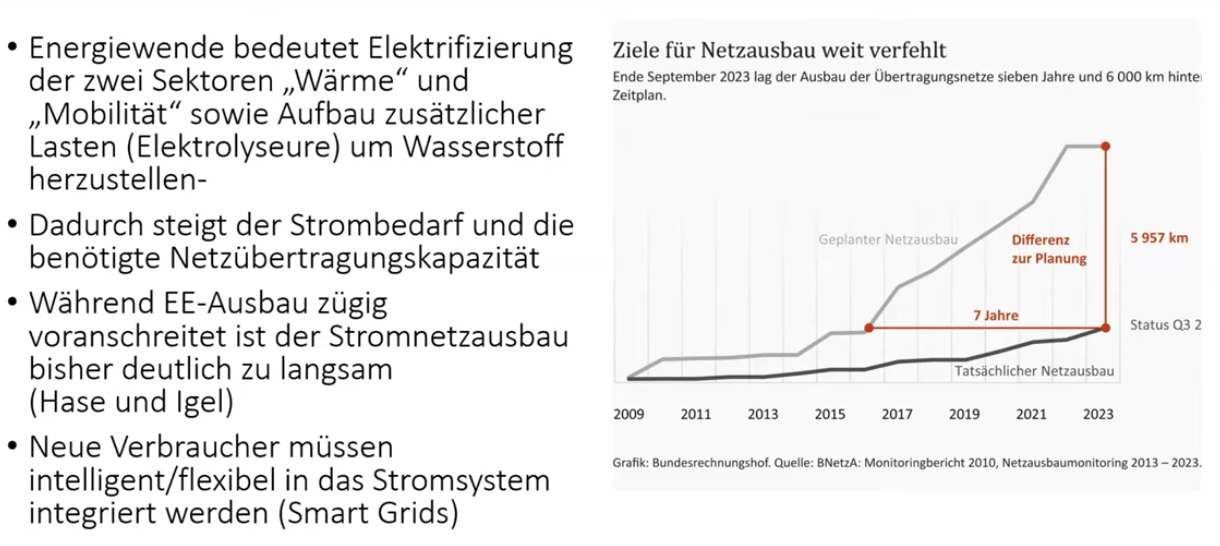 The expansion of wind and solar power is growing rapidly, but the upgrading of the grids and the electrification of buildings and transport are lagging behind. |
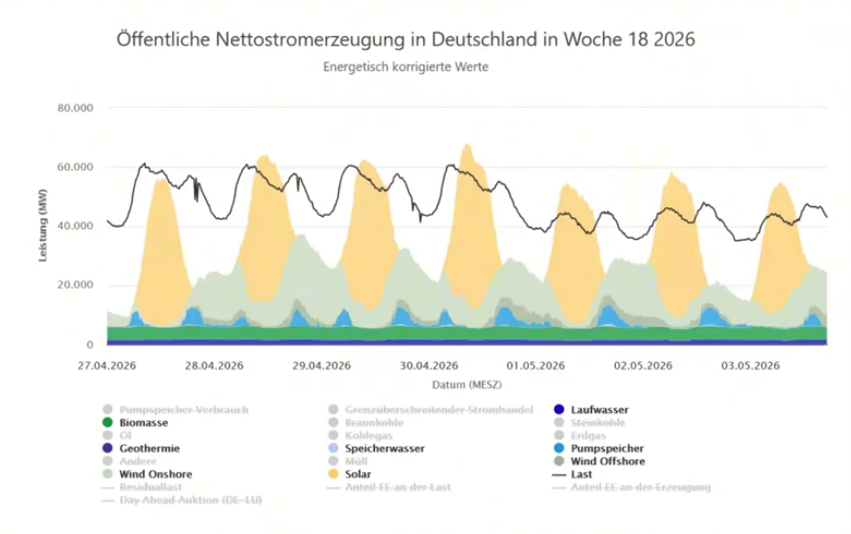 Over the past 10 years, renewable energy has become a major force. The period during which it will dominate electricity generation is growing ever longer. |
The slides will also be available shortly and will be posted online on this page.
04.06.26