








Exciting conference on the transition in heat supply

“When we talk about the energy transition, we usually mean the electricity transition – yet the heat transition is actually at least as important.” With these words, Raphael Gruseck, Head of District Heating Networks at the Ludwigsburg District Energy Agency LEA e.V., opened a highly engaging and excellently structured presentation. A total of 55 people took part in the online conference on 4 December 2025.
The audience included numerous stakeholders directly affected by heat-planning issues – among them municipal employees, representatives of public institutions (e.g. Klima-Agence, ILR), planning offices and operators. Many interested citizens also attended.
The speaker managed to present the complex topic of the heat transition in an expert yet very accessible way, while clearly highlighting the key societal and political questions and decision-making frameworks. Using practical examples – including a brief demonstration of weighing up centralised (e.g. district heating networks) and decentralised (e.g. heat pumps) heat sources in different districts of Luxembourg City – he guided the audience step by step through the many dimensions of the heat transition.
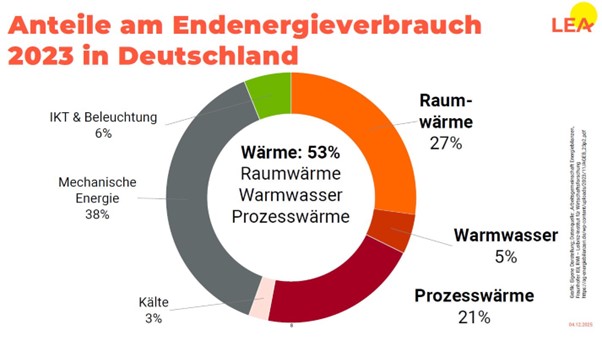
Heat demand across different sectors of society and the economy
Raphael Gruseck also analysed the advantages and disadvantages of various heat sources – from gas and biomass to decentralised renewable solutions and district heating – and emphasised that there is no single perfect solution. Instead, stakeholders must weigh different options, particularly in light of the imminent phase-out of natural gas. These trade-offs are political decisions that must involve society. The speaker stressed the importance of early and clear communication as well as the need for planning certainty for all parties involved.
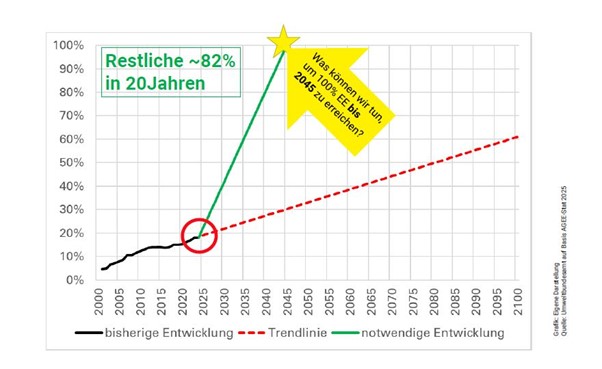
Action needed to achieve decarbonisation in the heat sector
Municipal heat planning plays a crucial role and should be realistic and implementable, rather than seen as a delaying instrument. In some districts the decision is straightforward: either a district heating network is appropriate due to high building density, or decentralised solutions are more suitable when buildings are far apart. Where the decision is not immediately obvious, heat planning provides the necessary basis for an objective discussion of the available options.
The speaker also pointed out that responsibilities must not be clarified only after planning is completed. The definition of tasks, available resources (know-how, staff, etc.), additional resources needed, potential operators of a district heating network and options for financing must all be addressed early on. Answering these questions is essential for ensuring successful implementation.
These considerations were reflected in the many questions and comments from the audience, which showed great interest in the roles of the different actors in planning, implementation and operation.
The conference was recorded and is available on the website (in German). The presentation slides can be downloaded from the download section at the top right.
If you are intereste in this topic, feel free to contact us at: energie@oeko.lu